English
 日本語
日本語 한국어
한국어
Home / Blog / Indusrty News / Aluminum Extrusion Profiles for Roof Rack: Alloy, Cross-Section & Sourcing Guide
Indusrty News
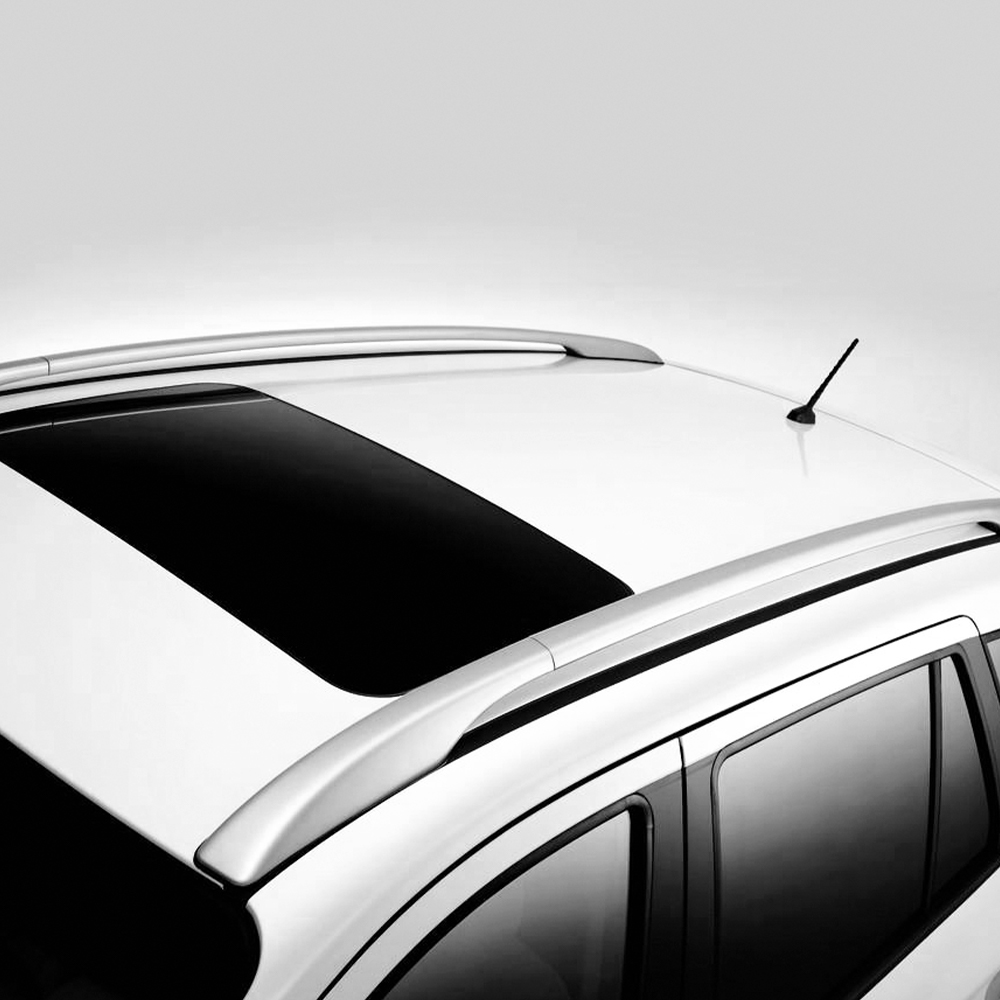
Roof rack builders have long debated whether to weld steel or bolt together off-the-shelf tubing. Neither answer is fully satisfying—until aluminum extrusion profiles entered the picture. A single T-slotted bar combines structural rigidity, corrosion immunity, and a modular slot system that accepts accessories without drilling a single hole. That combination is why aluminum extrusion profiles for roof racks have moved from niche overlanding forums into mainstream automotive and van-conversion builds.
Content
The extrusion process forces aluminum through a shaped die, producing continuous profiles with precise cross-sections and consistent wall thickness. For a roof rack, this matters because the load path is predictable, the weight stays low, and the surface arrives ready for anodizing or powder coating without secondary grinding or welding prep.
Aluminum's density sits around one-third that of mild steel, so a profile that replaces a comparable steel member immediately improves your vehicle's center of gravity and fuel economy. More importantly, aluminum naturally forms a passive oxide layer that resists rain, road salt, and UV exposure for the life of the vehicle—no paint, no rust.
From a structural standpoint, automotive-grade aluminum roof rack extrusion profiles engineered for vehicle applications are routinely manufactured from 6061-T6 or 6063-T5 alloys, both of which deliver yield strengths well suited to dynamic cargo loads encountered on highways and off-road tracks alike.
Two alloys dominate roof rack applications, and the choice between them shapes every downstream decision—from mold design to surface finish.
6061-T6 is the higher-strength option. Its magnesium-silicon composition, combined with artificial aging, produces a yield strength roughly 40% greater than 6063. Engineers specify it when a profile must bridge wide spans between mounting feet or support concentrated loads from roof-top tents and heavy cargo boxes. The trade-off is that 6061 extrudes more slowly and requires more attention to surface preparation before anodizing.
6063-T5 is the extrusion specialist's alloy. It flows through complex die geometries—think hollow T-slots, multi-void ladder profiles, and aerodynamic cross-sections—at higher speeds and with a finer grain structure. The resulting surface accepts bright dip anodizing beautifully, which is why it is the default choice for visible architectural and automotive trim components, including many camper van rack side rails.
For most roof rack builds, a hybrid approach works well: 6063 for the slotted crossbars where surface finish and accessory compatibility matter most, and 6061 for the longitudinal side rails and mounting feet where concentrated stress demands higher yield strength. Suppliers offering custom aluminum extrusion profiles across multiple alloy grades can produce both profiles from the same mold program, simplifying procurement.
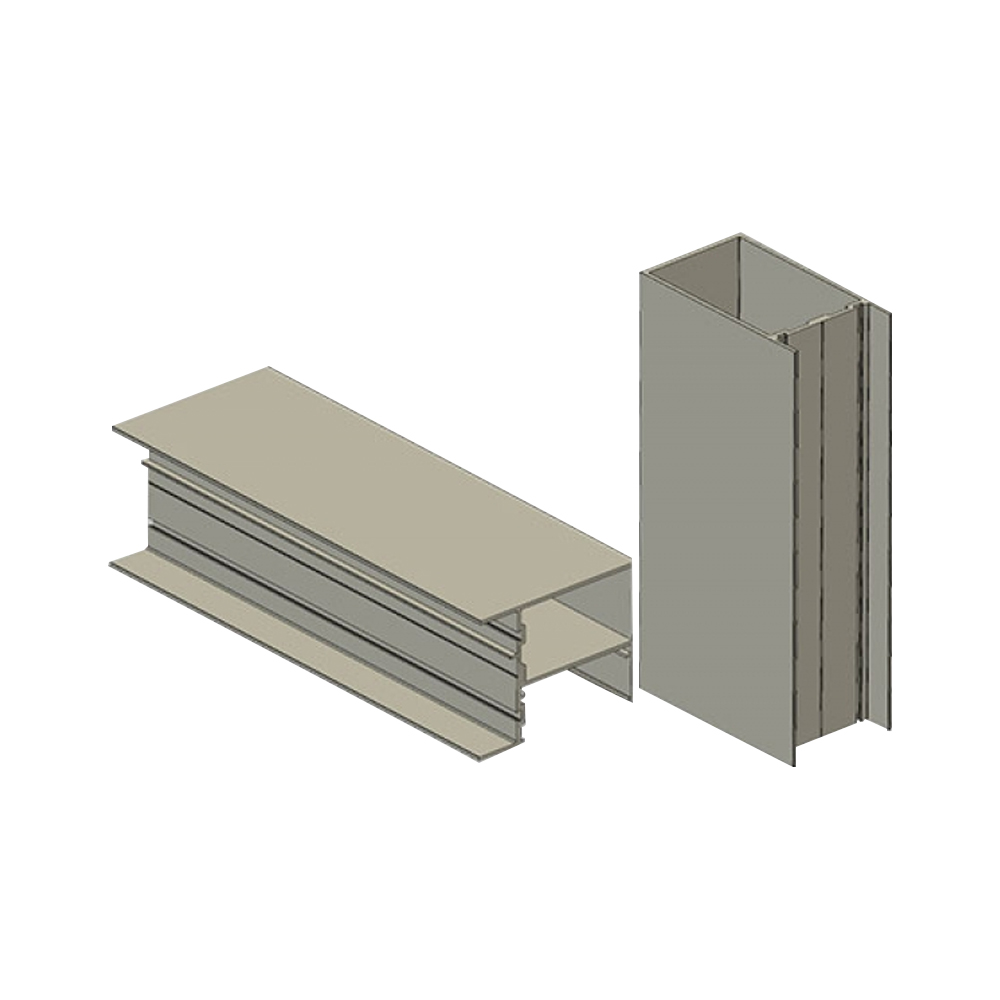
The cross-section profile determines what accessories a rack can carry and how easily the system can be reconfigured in the field. Four types appear most frequently in production and custom roof rack builds:
When sourcing, confirm that the supplier can extrude multi-void hollow sections—not just solid or single-void profiles—as ladder and double-T designs require larger press tonnage and more complex die engineering.
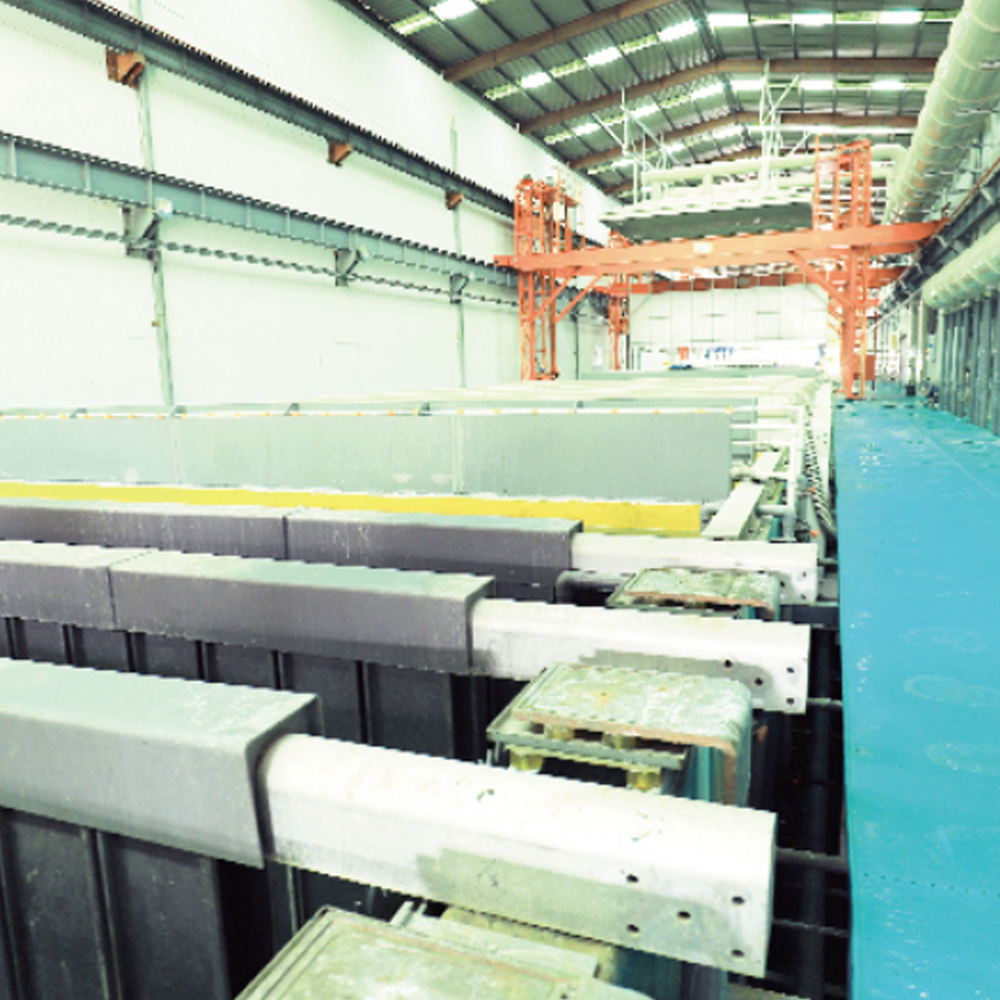
Raw extrusion—referred to as mill finish—leaves the aluminum exposed and is rarely specified for roof racks because it oxidizes to a dull grey over time. The three finishes used in production are anodizing, powder coating, and electrophoresis coating, each with distinct advantages.
Anodizing grows an electrochemically bonded oxide layer directly into the aluminum surface, typically 10–25 microns thick. It cannot chip or peel the way a topcoat can, and it preserves dimensional tolerances precisely—important for T-slots that must accept standard T-nuts. Black anodized crossbars have become the visual signature of premium overlanding racks. For detailed guidance on surface treatment options for aluminum extrusion profiles, understanding the hardness and UV performance of different anodize thicknesses is essential before specifying for outdoor automotive use.
Powder coating applies a thermoplastic or thermoset polymer layer typically 60–100 microns thick. It offers a broader color palette via RAL standards and superior impact resistance compared to thin anodize. The downside is that thick coatings can close up T-slot openings if not masked or post-machined, so dimensional control during application is critical.
Electrophoresis (e-coat) deposits paint via electrical current, producing an exceptionally uniform layer even inside hollow sections and complex geometries. It is the standard in automotive OEM applications where consistent film build in recessed channels matters for corrosion warranty claims.
Standard T-slot profiles from stock—the 2020, 4040, and 4545 series—cover most DIY roof rack builds and many aftermarket replacement bar scenarios. Lead times are short, minimum order quantities are low, and compatibility with off-the-shelf T-nuts and corner brackets is guaranteed.
Custom extrusion becomes the right answer when:
Partnering with a supplier that offers aluminum extrusion mold customization services in-house reduces iteration time because engineering and tooling teams work from the same dimensional data set. Sending drawings to a third-party die maker adds coordination overhead and often delays first-article approval.
A raw extrusion profile is just the starting point. The full production path for a finished roof rack profile typically includes CNC cutting to length, drilling or punching mounting holes at specified pitch, tapping end-holes for fastener assembly, and in some cases bending or roll-forming for curved side rails. More advanced builds add welding, where the 6xxx-series alloys are fully weldable with 4043 or 5356 filler wire, and assembly jigs that position profiles for squareness before final inspection.
One-stop suppliers who integrate aluminum deep-processing and precision machining services alongside extrusion offer a meaningful lead-time and quality advantage. When the team doing CNC drilling has immediate access to the extrusion data—wall thickness, slot geometry, exact alloy—hole positions are held to tighter tolerances and surface finish is preserved at cut edges. Outsourcing machining separately introduces tolerance stack-up at every hand-off.
Roof rack engineers distinguish between static load capacity—the maximum weight the rack can support while the vehicle is stationary—and dynamic load capacity, which governs road and off-road use where vibration and inertial forces multiply the effective load. A rack rated at 500 lb static may carry only 250–300 lb dynamically because highway vibration and cornering forces can double the stress on welds and fasteners.
When briefing an extrusion supplier, provide the following: expected payload in both static and dynamic configurations, the span between mounting feet (which directly sets the bending moment at the crossbar midpoint), the alloy temper you need (T5 vs T6), and the surface finish. A supplier experienced in automotive aluminum extrusion profiles will use these inputs to recommend appropriate section dimensions and wall thickness before cutting the die, rather than adjusting after the first prototype fails deflection testing.
Moment of inertia is the key structural property to request. For a 1" × 2" T-slot profile, Ix and Iy values directly predict deflection under a centered load and allow you to compare profiles across suppliers using the same engineering formula, rather than relying on load-rating claims alone.
Buyers sourcing aluminum extrusion profiles for roof rack production—whether for an OEM vehicle program or an aftermarket accessory line—should evaluate suppliers on press capacity, alloy certification, and post-extrusion fabrication depth. A facility running 40mm through 6000-ton presses can handle the full size range from compact car side rails to heavy-duty van crossbars from the same supplier relationship, reducing supplier count and simplifying quality audits.
Request material certifications to established international standards for aluminum alloy composition and mechanical properties such as ASTM B221 or EN 755-2. These documents confirm that the alloy you specified—6061-T6 or 6063-T5—was actually used in production, not a lower-grade substitute. For export-oriented programs, RoHS compliance and SGS certification are often required by downstream customers.
Finally, confirm that the supplier maintains finished-goods inventory of their most common standard profiles alongside custom production capability. Inventory availability shortens reorder cycles for high-volume SKUs while custom tooling handles the differentiated profiles that define your product's fit and appearance on specific vehicle platforms.

Copyright © 2025 Jiangyin Jianbang Aluminium Co., Ltd.
All Rights Reserved.
 Aluminum Extrusion Manufacturers
Aluminium Profile Suppliers
Aluminum Extrusion Manufacturers
Aluminium Profile Suppliers