English
 日本語
日本語 한국어
한국어Indusrty News
Content
The Critical Role of Extruded Aluminum in Thermal Management
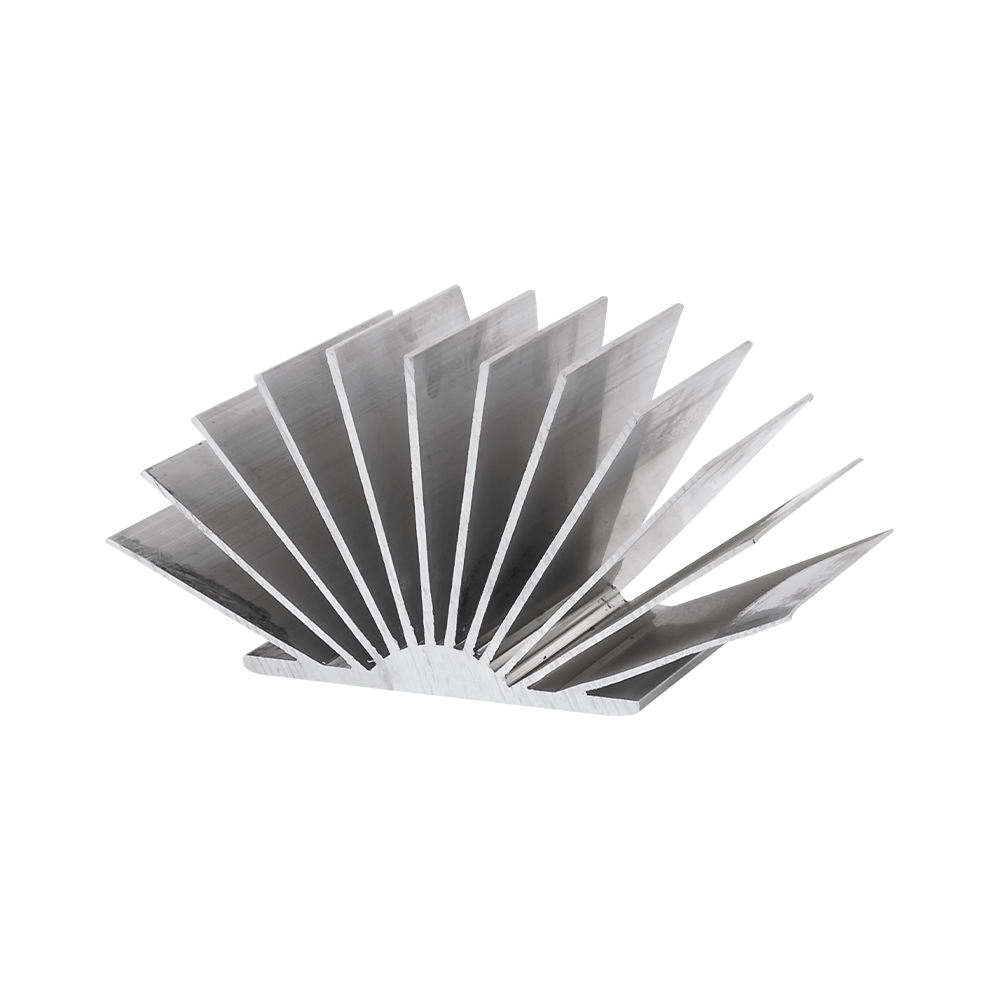
Aluminum heat sink profiles are the backbone of modern thermal management systems, providing an efficient and cost-effective solution for dissipating heat generated by electronic components, LED lighting, and industrial machinery. The primary function of these profiles is to transfer heat from a hot source to the surrounding environment, thereby preventing overheating and ensuring the longevity and reliability of the device. Aluminum is the material of choice for this application due to its excellent thermal conductivity, lightweight nature, and corrosion resistance. Among various manufacturing methods, extrusion stands out as the most versatile and economical process for creating complex cross-sectional shapes that maximize surface area and airflow.
The efficiency of a heat sink is directly proportional to its surface area and the thermal conductivity of the material. Aluminum heat sink profiles are engineered with intricate fin structures that significantly increase the surface area exposed to the cooling medium, typically air. This design allows for rapid heat dissipation through convection. Furthermore, the extrusion process enables the production of long, continuous profiles with consistent dimensional accuracy, making them ideal for mass production applications where uniformity and cost-efficiency are paramount. Understanding the nuances of these profiles is essential for engineers and designers aiming to optimize thermal performance in their projects.
Manufacturing Process and Alloy Selection
The production of aluminum heat sink profiles begins with the selection of the appropriate alloy. The most commonly used series for heat sinks are the 6000 series, particularly 6063 and 6061. Alloy 6063 is favored for its excellent extrudability, allowing for the creation of thin fins and complex geometries without compromising structural integrity. It offers good thermal conductivity and surface finish quality, which is crucial for subsequent anodizing processes. On the other hand, alloy 6061 provides higher mechanical strength and is often chosen for applications requiring greater structural rigidity, although it is slightly more difficult to extrude into very fine details.
The Extrusion Process
During extrusion, a heated aluminum billet is forced through a die with a specific cross-sectional profile. This process determines the shape of the heat sink, including the height, thickness, and spacing of the fins. The precision of the die is critical, as even minor deviations can affect the thermal performance and fitment of the heat sink. After extrusion, the profiles undergo quenching and aging treatments to enhance their mechanical properties. The ability to produce custom profiles makes extrusion highly adaptable to unique thermal challenges, allowing designers to tailor the heat sink geometry to the specific constraints of their enclosure or airflow environment.
Design Optimization and Geometric Considerations
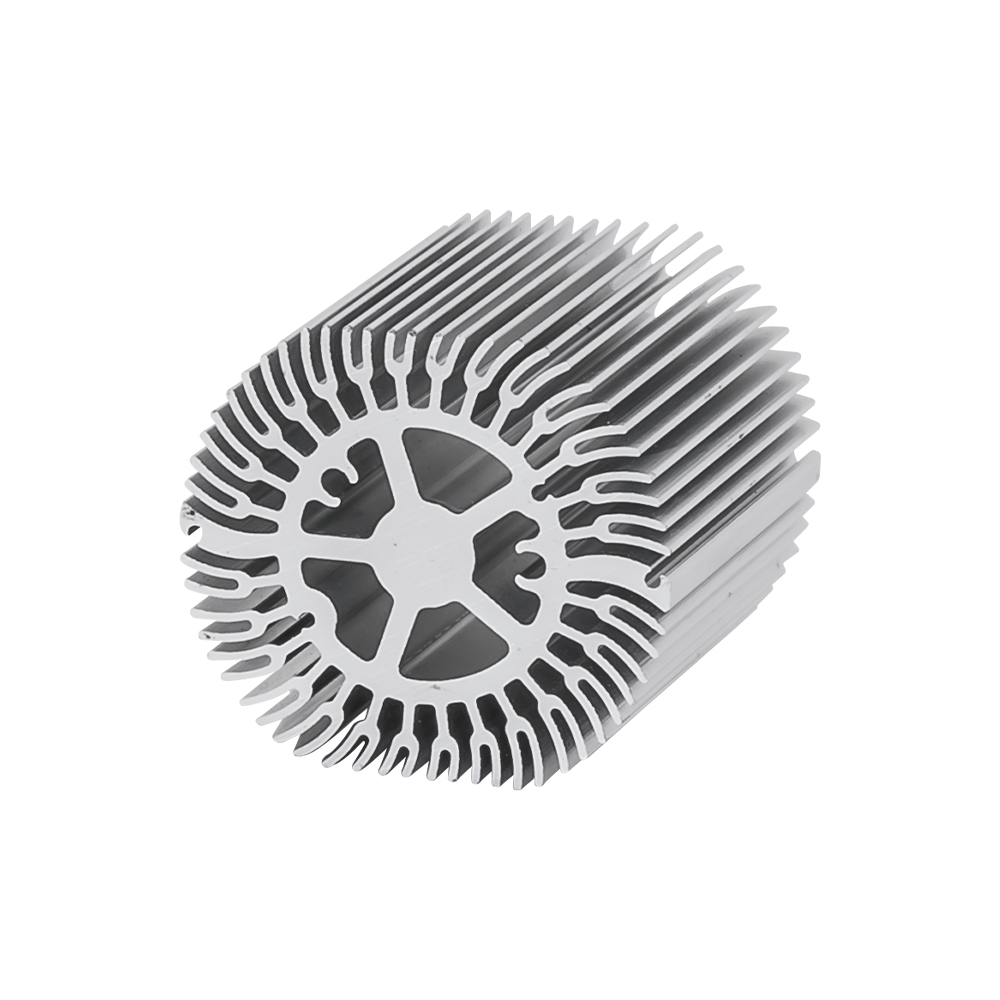
Designing an effective aluminum heat sink profile involves balancing several geometric parameters to maximize heat transfer while minimizing material usage and weight. The key factors include fin height, fin thickness, fin spacing, and the overall base thickness. Increasing the fin height increases the surface area, but if the fins are too tall, the tips may not receive adequate heat from the base, leading to diminishing returns. Similarly, reducing fin thickness allows for more fins within a given width, but excessively thin fins can be fragile and difficult to manufacture.
| Parameter | Impact on Performance | Design Constraint |
|---|---|---|
| Fin Height | Increases surface area | Diminishing returns due to temperature gradient |
| Fin Spacing | Affects airflow resistance | Too close causes high pressure drop; too far reduces area |
| Base Thickness | Improves lateral heat spreading | Adds weight and material cost |
| Fin Thickness | Structural integrity | Limited by extrusion capabilities |
Optimizing fin spacing is particularly important for natural convection applications, where airflow is driven by buoyancy rather than fans. In such cases, wider spacing is required to allow air to flow freely between the fins. For forced convection systems, closer fin spacing can be used to maximize surface area, as the fan provides sufficient pressure to push air through the narrower channels. Computational Fluid Dynamics (CFD) simulations are often employed to model these interactions and refine the profile design before prototyping.
Surface Treatments and Interface Materials
The surface condition of aluminum heat sink profiles plays a significant role in their thermal performance and durability. Raw aluminum has a relatively low emissivity, which limits its ability to radiate heat. To enhance this, surfaces are often treated with anodizing, a process that creates a hard, durable oxide layer. Anodizing not only improves heat radiation but also provides excellent corrosion resistance and electrical insulation. Black anodizing, in particular, is preferred for high-performance applications as it has higher emissivity compared to clear or colored anodizing.
Thermal Interface Materials
Even with a perfectly designed profile, the efficiency of heat transfer depends heavily on the interface between the heat source and the heat sink base. Microscopic imperfections on both surfaces create air gaps, which act as insulators due to air's low thermal conductivity. Thermal Interface Materials (TIMs) such as thermal paste, pads, or phase-change materials are used to fill these gaps and ensure efficient heat conduction. Selecting the right TIM is crucial; high-quality thermal pastes can reduce thermal resistance by up to 50% compared to dry contact, significantly lowering the operating temperature of the component.
- Anodizing enhances emissivity and corrosion resistance.
- Black anodized surfaces radiate heat more effectively than bare aluminum.
- Thermal pastes fill microscopic air gaps to improve conduction.
- Proper mounting pressure ensures optimal contact with the TIM.
Applications and Future Trends in Heat Sink Technology
Aluminum heat sink profiles are ubiquitous in various industries, from consumer electronics to automotive and renewable energy systems. In LED lighting, they are essential for maintaining the junction temperature of diodes, which directly impacts light output and lifespan. In power electronics, such as inverters and converters, large extruded profiles dissipate heat from IGBTs and MOSFETs, ensuring stable operation under high loads. The automotive industry increasingly relies on aluminum heat sinks for electric vehicle battery management systems and onboard chargers, where thermal efficiency is critical for safety and performance.
Looking ahead, the demand for higher power densities and miniaturization is driving innovation in heat sink design. Hybrid solutions that combine extruded aluminum bases with bonded copper fins or heat pipes are becoming more common to address localized hot spots. Additionally, advancements in additive manufacturing are enabling the creation of complex, organic shapes that are impossible to achieve through extrusion, offering new possibilities for optimizing airflow and heat transfer. Despite these emerging technologies, aluminum heat sink profiles remain the standard for cost-effective, reliable thermal management, continuing to evolve through improved alloys, smarter designs, and advanced surface treatments.