English
 日本語
日本語 한국어
한국어
Home / Blog / Indusrty News / Rail Vehicle Aluminum Extrusion: Alloys, Applications & Sourcing Guide
Indusrty News
Aluminum now accounts for the body structure of the vast majority of high-speed trains worldwide — and the shift happened for a simple reason. A full aluminum carbody weighs roughly one-third less than an equivalent steel design, and in rail transit every kilogram saved translates directly into lower energy consumption, faster acceleration, and reduced wear on track infrastructure. The global market for aluminum profiles in rail transit was valued at $8.16 billion in 2025 and is projected to reach $12.5 billion by 2035, growing at a 4.4% CAGR. Behind those numbers sits one manufacturing process doing most of the heavy lifting: aluminum extrusion.
This guide walks procurement engineers and rolling-stock project managers through the material science, application scope, surface finishing options, and supplier qualification criteria that matter most when specifying rail vehicle aluminum extrusions.
Content
Steel remains dominant in heavy freight and locomotive undercarriages — its toughness and cost structure are hard to beat for those applications. But for passenger car bodies, metro cars, light rail vehicles, and high-speed train shells, aluminum extrusion has effectively become the default choice. Three structural reasons explain why.
Weight reduction without structural compromise. Aluminum's density is roughly one-third that of steel, yet modern 6000-series alloys deliver tensile strength figures that comfortably meet the load requirements of rail carbodies. Hollow extrusion profiles replace conventional two-shell sheet assemblies, eliminating a substantial number of joints and welded seams. Fewer joints mean less potential for fatigue crack initiation — a critical consideration in vehicles subject to millions of loading cycles over a 30-plus-year service life.
Energy savings compound the weight benefit. A lighter consist accelerates faster, brakes shorter, and draws less power from the grid or fuel tank. In urban rapid transit systems where trains stop every two to three minutes, the energy arithmetic is especially favorable.
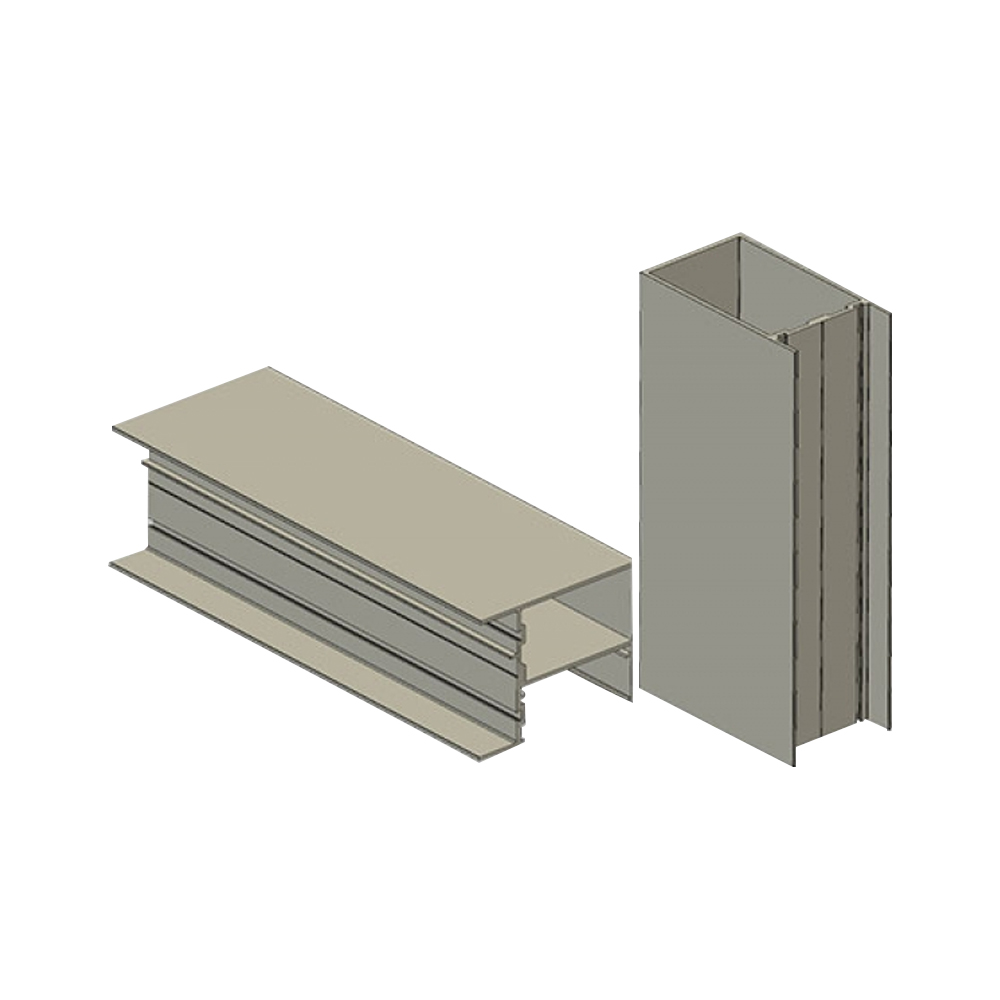
Design freedom through complex cross-sections. Extrusion dies can produce profiles with integrated stiffeners, hollow chambers, cable routing channels, and functional attachment features in a single pass. A single extruded floor panel, for example, can incorporate structural ribs, drainage channels, and mounting clips simultaneously — components that would otherwise require separate fabrication and assembly steps. For passenger trains, extruded side wall panels can span the full car length — sometimes exceeding 25 meters — without intermediate joints.
Corrosion resistance and lifecycle value. Bare aluminum forms a self-healing oxide layer that resists atmospheric corrosion without painting in many environments. When additional protection is required — salt-air coastal routes, tunnel environments with chemical exposure — the same profiles respond well to anodizing and powder coating without dimensional distortion. Lower maintenance cost over a 30-year operational life offsets the higher initial material cost compared to carbon steel.
Not all aluminum alloys extrude well, and not all extrudable alloys meet the structural demands of rail applications. In practice, rail vehicle procurement centers on a narrow band of 6000-series alloys, with 7000-series appearing in specific high-load components.
| Alloy | Key Properties | Typical Rail Application |
|---|---|---|
| 6005A | Excellent extrudability, good corrosion resistance, medium strength | Car body side panels, roof sections, floor panels |
| 6061 | Higher strength, good weldability, widely certified | Structural frames, door surrounds, underframe members |
| 6082 | Highest strength in 6000 series, excellent fatigue resistance | Bogie frames, load-bearing longitudinal beams |
| 7075 | Very high tensile strength, harder to weld, requires careful heat treatment | High-stress brackets, articulation joints on high-speed trains |
From a dimensional standpoint, modern large-format extrusion equipment can produce profiles with wall thicknesses as fine as 1.5 mm and cross-section widths up to 700 mm. Maximum extrusion lengths for rail carbody panels can reach 30 meters, allowing entire side-wall sections to be produced as single pieces — a major simplification for assembly and quality control.
Alloy selection is rarely made in isolation. Weldability matters as much as strength because MIG and FSW (friction stir welding) joints are how individual profiles are assembled into full carbodies. 6005A and 6061 respond predictably to MIG welding; 6082 requires tighter process controls; 7075 demands friction stir welding or mechanical fastening in most structural joints.
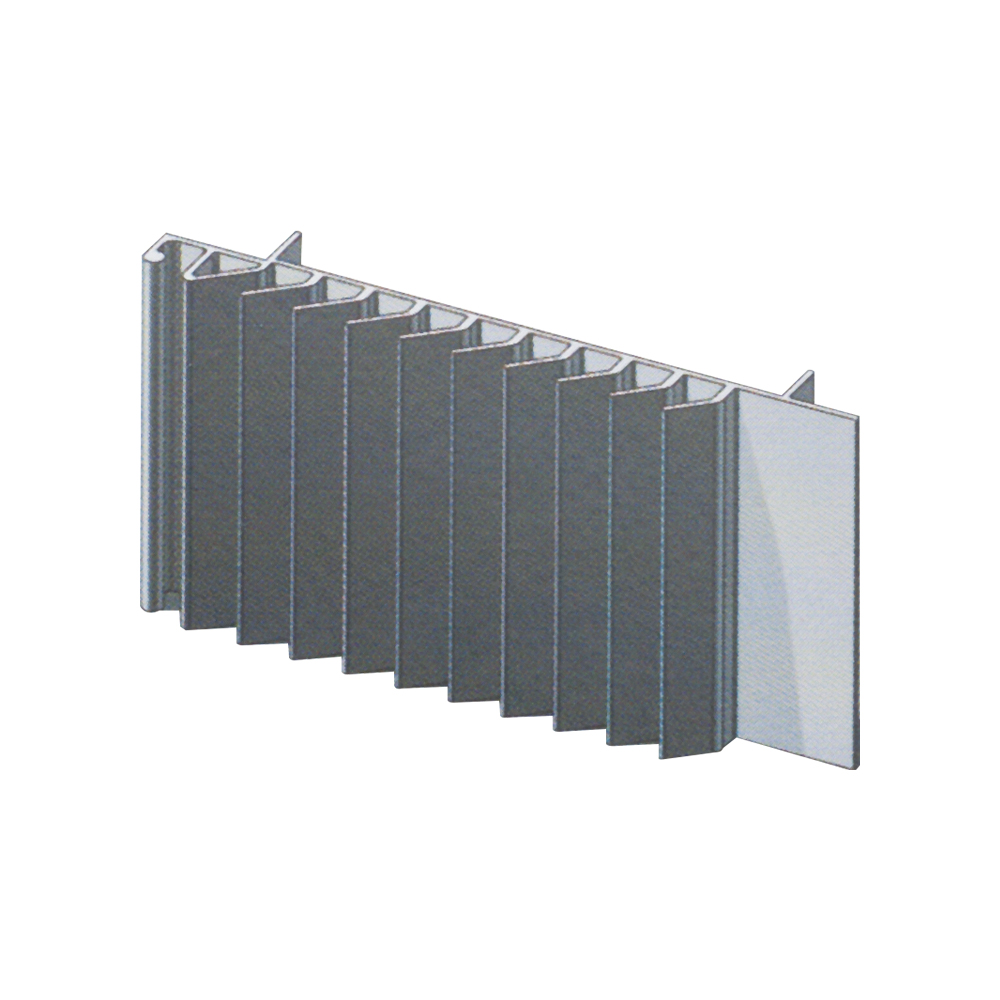
A modern aluminum rail car contains extruded profiles in virtually every subsystem. Understanding the application map helps procurement teams define the right specifications upfront rather than discovering mismatches late in the supply chain.
Car body structure. The largest volume application. Side walls, roof panels, floor panels, cant rails (the curved transition profiles connecting floor to side wall), and door pillars are all produced from extruded hollow or semi-hollow profiles. The structural skin of a metro car or high-speed train carbody is essentially an assembly of large-format extrusions welded longitudinally. Tolerances on flatness and straightness are tight — typically ±1 mm per meter of length — because dimensional accuracy at this stage determines how well interior fit-out components align downstream.
Interior frames and passenger comfort components. aluminum extrusion profiles for industrial rail transit components extend well beyond the structural shell. Seat frames, luggage rack structures, handrail brackets, partition frames, and ceiling panel supports are all produced from smaller extruded sections. These components see repeated mechanical loading from passengers and must maintain dimensional stability under thermal cycling as the car heats and cools through daily service cycles.
Thermal management and electrical systems. Cooling systems for traction inverters, battery packs on hybrid and EMU trains, and HVAC equipment increasingly use extruded aluminum heat sink profiles. The same extrusion process that produces structural channels can produce complex fin geometries optimized for specific thermal resistance targets. Electrical conduit channels, cable trays, and conductor rail housings are also produced from aluminum extrusions — combining structural function with electromagnetic shielding in some designs.
Doors and access systems. Rail vehicle doors are high-cycle components — a metro door in urban service may execute 500,000 or more open-close cycles over its service life. Extruded aluminum door frames and leaf sections provide the combination of stiffness, low mass, and machinability needed for precision guide rail integration. Pocket door systems for intercity trains use extruded aluminum tracks and guide channel profiles that must hold geometry over decades of thermal and mechanical load.
The base aluminum surface is adequate in controlled environments, but most rail applications call for enhanced protection or specific aesthetic finishes. Three processes cover the majority of requirements.
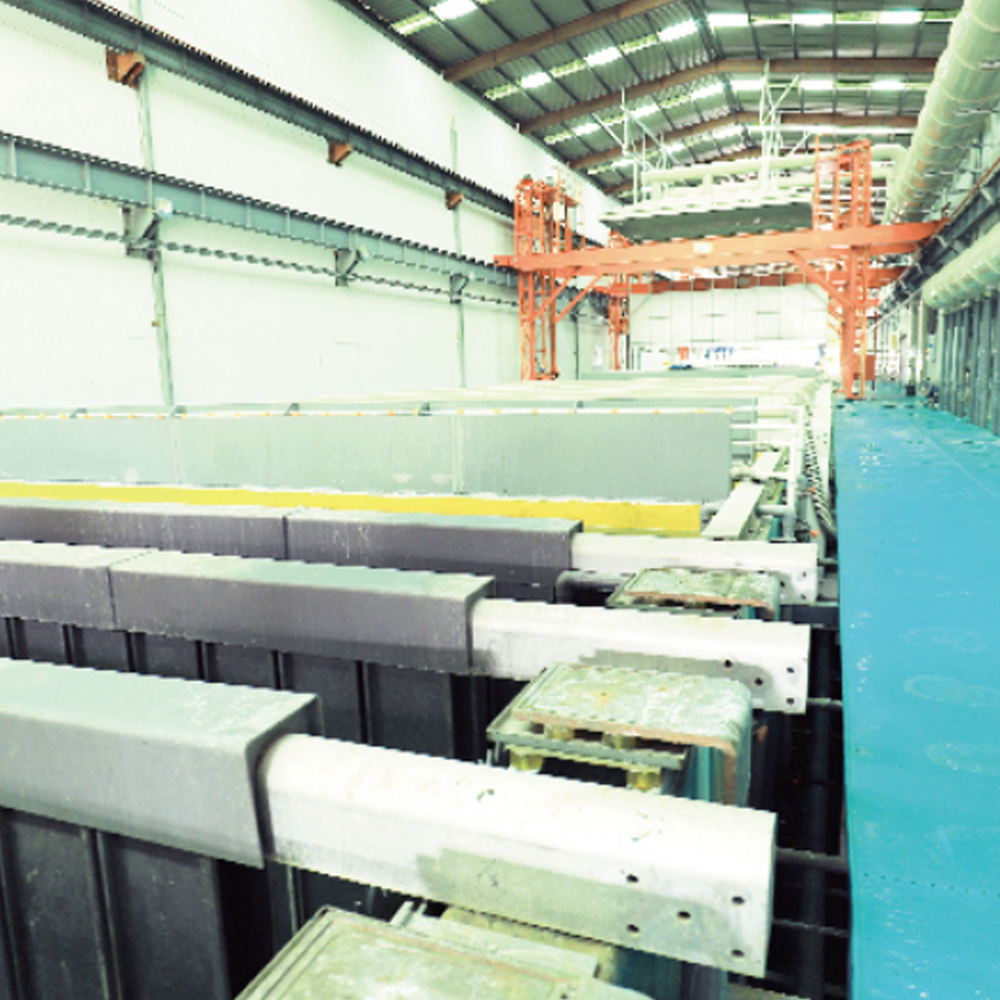
Anodizing builds an electrochemically grown aluminum oxide layer — typically 10 to 25 microns thick for architectural applications, up to 50 microns for hard-anodized structural surfaces. The result is a hard, scratch-resistant, non-conductive surface that bonds strongly to the base metal and cannot peel or flake. Anodizing is the preferred finish for interior structural profiles and visible surfaces where a metallic appearance is acceptable. It adds no meaningful dimensional change and survives decades of cleaning with standard rail maintenance chemicals.
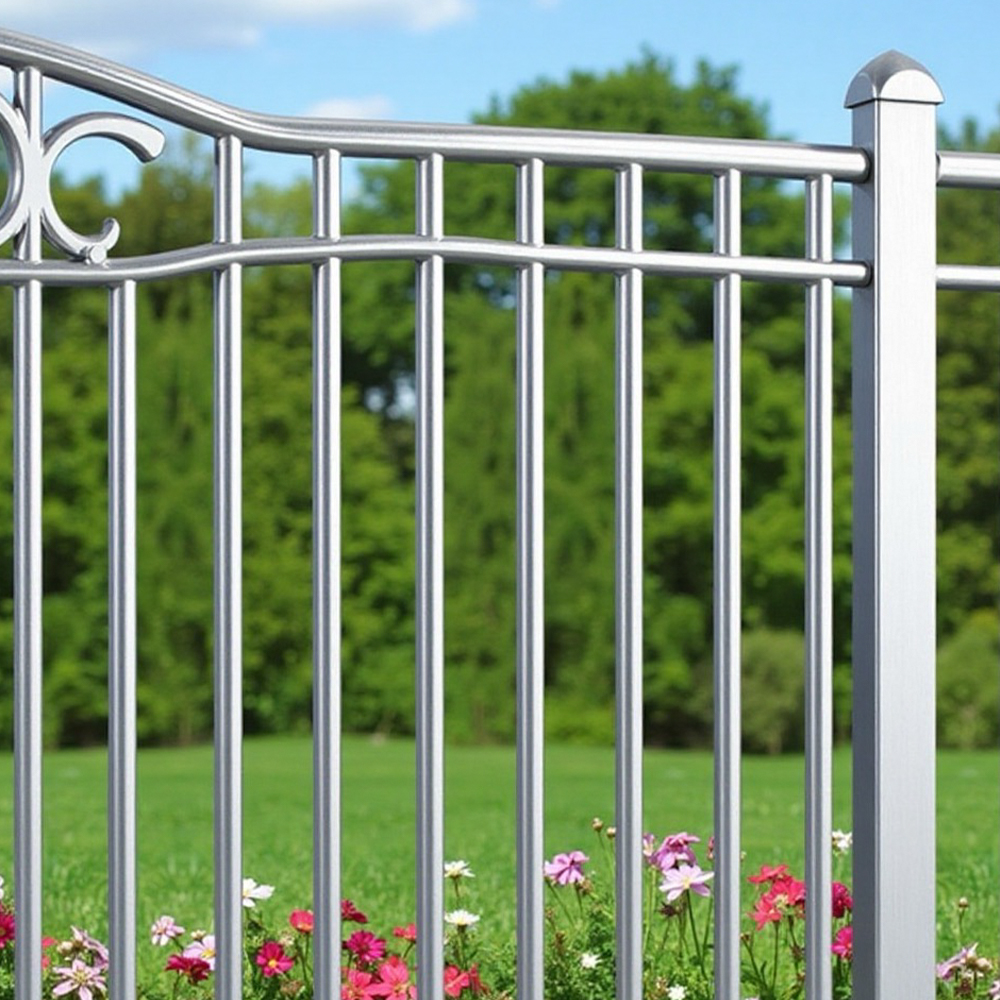
Powder coating applies a thermoset polymer layer — typically 60 to 120 microns — in any RAL color. It provides good impact resistance and UV stability, making it the standard choice for exterior body panels, door surrounds, and any surface requiring a specific corporate livery color. Modern powder coatings meet rail sector salt-spray requirements of 1,000 hours or more. Powder-coated surface treatment options for aluminum profiles including anodizing and powder coating can be applied over chromate or chrome-free conversion coatings for improved adhesion and corrosion performance in demanding environments.
Electrophoretic coating (e-coat) deposits a polymer film through electrochemical deposition, achieving very uniform coverage — including inside hollow sections and blind cavities that powder coating struggles to reach. It is used for underframe profiles and complex structural assemblies where complete coverage of all surfaces is required for corrosion protection. E-coat is often applied as a primer layer, with powder coat or liquid topcoat applied over it for color and UV resistance.
Rail vehicle components operate in safety-critical environments and are subject to regulatory oversight in most markets. When evaluating suppliers, the certification landscape is a faster filter than facility visits alone.
EN 15085 (Railway Applications — Welding of Railway Vehicles and Components) is the central European standard governing how aluminum and steel welded structures for rail vehicles are designed, manufactured, and inspected. Compliance is mandatory for suppliers serving EU-market rolling stock. Certification levels run from CL1 (highest complexity, full quality management scope) through CL4. A supplier producing full carbody structures typically requires CL1 or CL2 certification; a supplier producing discrete welded brackets may qualify at CL3. Checking a supplier's actual certification level — not just their claimed familiarity with the standard — is a critical procurement step.
ISO 9001 remains the baseline quality management system requirement. It establishes that a supplier has documented and audited processes for design control, production planning, inspection, and non-conformance management. For rail aluminum extrusion, ISO 9001 alone is insufficient — but its absence should eliminate a supplier from consideration immediately.
IATF 16949 was developed for the automotive sector but is increasingly required by rail vehicle OEMs sourcing high-volume precision components, particularly where extrusions feed into automated assembly lines. Its emphasis on APQP (Advanced Product Quality Planning), FMEA (Failure Mode and Effects Analysis), and production part approval processes maps well onto rail applications where design freeze and production validation documentation are required before series production begins.
Beyond certifications, incoming material traceability documentation — heat numbers, mechanical test certificates, dimensional inspection records — should be treated as a contractual requirement rather than an optional convenience. In the event of an in-service incident, the ability to trace a component back to a specific production batch and verify its mechanical properties against the original test certificate is both a regulatory requirement and a practical liability management tool.
The technical specifications narrow the supplier field considerably. What separates adequate suppliers from strong long-term partners usually comes down to production capacity, tooling capability, and process integration.
Extrusion press capacity and range. Large-format rail profiles — particularly carbody panels and floor sections — require presses in the 4,500- to 7,000-tonne class. A supplier running only smaller presses will not be able to produce those sections regardless of how capable their quality systems are. Confirm that the specific press sizes available match the cross-section width and wall thickness requirements of your profiles before investing time in qualification discussions.
In-house tooling. Die lead time and die revision speed have a material impact on project schedules. Suppliers with custom aluminum extrusion mold design and tooling services in-house can respond to design changes in days rather than the weeks often required when tooling is outsourced. For rail programs with compressed development timelines, this is a concrete commercial advantage.
Integrated downstream processing. Extruded profiles for rail vehicles rarely ship as-extruded. CNC machining of mounting features, drilling patterns, and end-face geometry; friction stir or MIG welding of sub-assemblies; surface treatment; and dimensional inspection are all typically required before profiles are delivered to the carbody assembly line. Suppliers who perform these steps under one roof reduce coordination overhead, compress lead times, and create clearer accountability when non-conformances arise.
Testing and inspection equipment. Spectroscopic alloy verification, tensile and hardness testing, and dimensional CMM inspection should be routine production capabilities — not something the supplier sends out to a third-party lab. For hollow structural profiles, ultrasonic or X-ray weld inspection capability confirms that seam welds and friction-stir joints meet the quality levels required by EN 15085 design documentation.
Jiangyin Jianbang Aluminium operates industrial aluminum extrusion profile manufacturing capabilities across 21 extrusion lines including 6,500-tonne and 4,500-tonne presses suited to large rail transit profiles, with an in-house mold machining center and full downstream processing — CNC machining, surface treatment, and assembly — supported by ISO 9001, IATF 16949, ISO 45001, and ISO 14001 certifications. With over 30 years of production history and an annual capacity exceeding 120,000 tonnes, the company provides the scale and documentation infrastructure that rail vehicle procurement programs require.

Copyright © 2025 Jiangyin Jianbang Aluminium Co., Ltd.
All Rights Reserved.
 Aluminum Extrusion Manufacturers
Aluminium Profile Suppliers
Aluminum Extrusion Manufacturers
Aluminium Profile Suppliers