English
 日本語
日本語 한국어
한국어
Home / Blog / Indusrty News / Aluminum vs Steel Density: Weight, Stiffness and the Real Strength-to-Weight Story
Indusrty News
You are designing a roof rack, a battery tray, or a photovoltaic mounting rail. The first drawing in steel passes the strength check but misses the weight target by 30 kg. Switching to aluminum seems like the obvious answer. But once you recalculate the deflection and increase the section size to keep the stiffness, the weight saving shrinks from "two-thirds lighter" to something closer to 45–55%. That is the gap between the textbook density of aluminum and steel, and the density that actually shows up in your bill of materials.
Core conclusion: Aluminum's density is about 2.70 g/cm³ while steel ranges from 7.75 to 8.05 g/cm³ depending on grade. By volume, aluminum is roughly 65% lighter. In practice, equivalent-strength aluminum parts weigh roughly 40–60% less than steel parts, while stiffness-critical parts can end up at nearly the same weight. The material choice is not about density alone; it is about density combined with modulus, yield strength, manufacturing freedom, and lifecycle behavior.
This guide breaks down the numbers that matter—density, specific stiffness, specific strength, section design, and application-level tradeoffs—so you can make the switch with engineering confidence rather than a rule of thumb.
Content
Density values for engineering grades vary less than people expect. Pure aluminum sits at 2.70 g/cm³; common wrought alloys (6061, 6063, 5052) range from 2.66 to 2.75 g/cm³. Steel is consistently in the 7.75–8.05 g/cm³ band: carbon steel around 7.85, stainless grades around 7.9–8.0. The table below summarizes the properties that interact with density when you replace steel with aluminum.
Two observations from this table define the entire selection logic. First, the specific stiffness values are almost identical—so in pure stiffness-limited geometry, aluminum does not automatically win on weight. Second, the yield strength gap means aluminum can win decisively when the part fails by yielding rather than deflection.
This is the part that surprises many buyers: if you compare density only, aluminum appears three times lighter. But when you design a structural member, density works together with stiffness and strength. Three load cases matter in practical extrusion design.
For a rod or column loaded axially, deflection depends on EA (modulus × area). Aluminum's modulus is 1/3 of steel's, so the area must increase by 2.9× to match stiffness. The weight lands at about 98% of the steel version—almost no saving.
In bending, the second moment of area scales with the cube of thickness. An equal-stiffness aluminum beam can be lighter by roughly 50%, because thickening the section recovers stiffness faster than the density penalty adds weight.
When yielding controls the design, the strength-to-density ratio is what matters. A 6061-T6 extrusion at 240 MPa yield has a specific strength around 89 kN·m/kg, while A36 steel at 250 MPa sits near 32 kN·m/kg. Aluminum parts here often finish 50–65% lighter.
There is also a fourth case worth naming explicitly: buckling. With lower modulus, thin-walled aluminum sections under compression are more prone to local instability. Designers frequently add ribs, stiffeners, or slightly thicker walls—all of which erode the theoretical weight advantage. The section geometry, not the raw density, decides the final weight.
The density debate becomes clearer when you normalize by weight. Two metrics cut through the confusion:
The bar chart below shows the relative weight of three structural members designed to the same performance target, starting from a 10 kg steel reference:
Steel baseline
≈ 10 kg
Strength-limited Al
≈ 5 kg
Bending-limited Al
≈ 6 kg
Axial-limited Al
≈ 9.8 kg
Approximate values for illustrative structural geometry; exact ratios depend on shape factor and alloy.
This is the hidden metric most sourcing teams miss. The same aluminum alloy that saves 50% on a bracket may save nearly nothing on a long compression strut. The application decides the outcome—not the material standard.
In practice, the aluminum-vs-steel decision is decided by the load case. The distribution below reflects how demand for extruded aluminum splits across major end-use sectors where weight, corrosion, and design freedom are the deciding factors.
Illustrative breakdown based on typical extrusion demand patterns; not an official market report.
Take automotive as an example: a roof-rack extrusion or a battery-tray rail is usually designed around stiffness, fatigue, and crash energy management, not simple tensile yielding. Our automotive aluminum extrusion profiles are section-optimized for those loading patterns. The same logic explains why aluminum's role in automotive lightweighting keeps growing even though its density advantage is often overstated in simple comparisons.
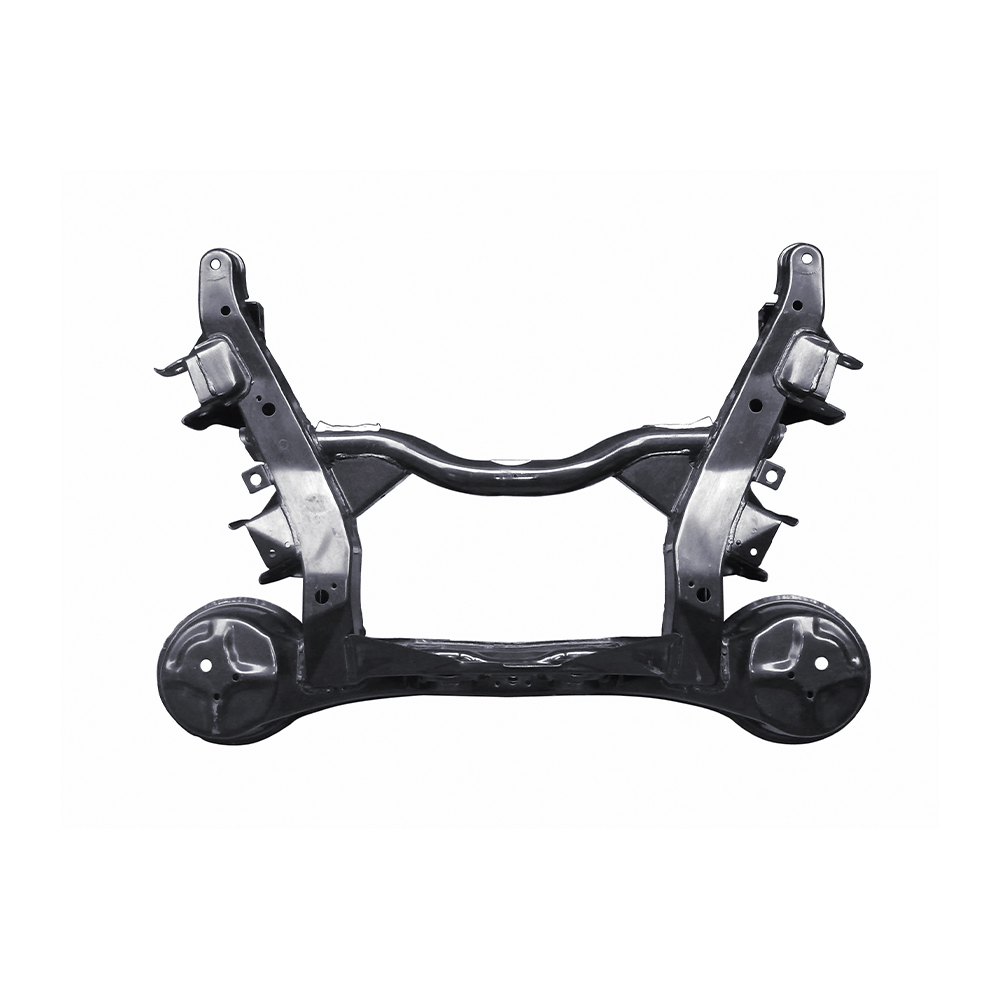 Automotive Aluminum Extrusion Profiles Suppliers, Custom FactoryAs Automotive Aluminum Extrusion Profiles Suppliers and Automotive Aluminum Extrusion Profiles Factory in China, Jianbang offer Custom Au...View Product →
For energy-storage systems, weight is not the only driver. Battery enclosures also benefit from aluminum's thermal conductivity, non-magnetic properties, and predictable crash behavior. An aluminum extrusion for energy-storage battery packs can integrate cooling channels and mounting bosses into a single profile, replacing a welded steel fabrication with a lighter, more accurate component.
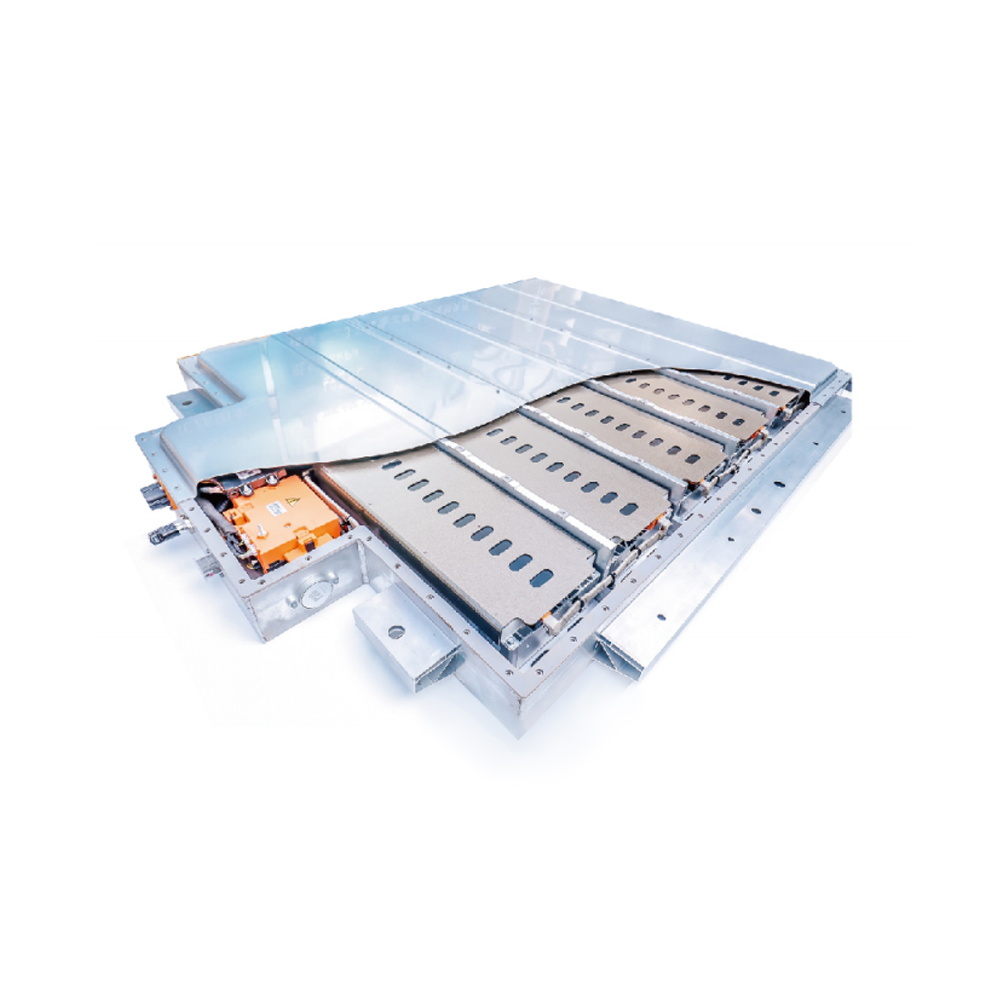 Aluminium Extrusion for Energy Storage Battery Pack Manufacturers, Factory - JiaJianbang is Aluminium Extrusion for Energy Storage Battery Pack Manufacturers and Factory in China, Custom Aluminium Extrusion for Energy...View Product →
Here is a practical workflow our engineers use with customers who are evaluating a switch. It avoids the two most common mistakes: assuming aluminum always wins on weight, and assuming steel always wins on cost.
Deflection-critical? Buckling-critical? Yield-critical? Run the calculation before you compare materials. The density ratio alone will mislead you.
Do not simply scale the steel profile. Take advantage of extrusion freedom: ribs, hollow chambers, and optimized wall placement recover a large portion of the lost stiffness.
Aluminum extrusion dies are less expensive than steel forging or complex welding setups. But surface treatment (anodizing, powder coating) and corrosion protection add cost—include them in the comparison.
Weight saving in transport vehicles cuts fuel or battery consumption for the entire service life. Aluminum's corrosion resistance reduces maintenance in outdoor structures. These benefits often outweigh a higher initial material cost.
If the application has real thermal loads—like a heat sink or a battery cooler—aluminum's conductivity (167–230 W/m·K) is about four to five times higher than steel's. The density advantage and the thermal advantage combine in the same family of products: industrial aluminum heat-sink profiles have become the default in power electronics and charging infrastructure where steel would require a larger envelope or an active cooling fan.
 Aluminum Heat Sink Profiles Manufacturers, Factory - Jiangyin Jianbang AluminiumJianbang is Aluminum Heat Sink Profiles Manufacturers and Factory in China, Custom Aluminum Heat Sink Profiles online, We supply all kind...View Product →
Density gets you in the door; long-term behavior decides whether you stay. Steel needs galvanizing or a paint system for outdoor use, and the coating must be repaired after cutting or welding. Aluminum forms a self-protecting oxide layer within microseconds of exposure. When additional protection is needed, anodizing produces a hard, adhesive surface up to 25 µm thick, and powder coating adds a second barrier against salt spray and UV.
Compliance considerations also favor aluminum in several sectors. Automotive lightweighting is driven by CO₂ emission targets and electric-vehicle range requirements. Rail and mass-transit specifiers increasingly use the specific strength of aluminum extrusions to reduce axle load and energy consumption. In photovoltaic mounting, corrosion-free aluminum frames eliminate the maintenance cycles that galvanized steel brackets require in saline or high-humidity environments. For machined components, the close tolerances and repeatability of extruded aluminum directly support CNC-machined aluminum components in automated production lines.
From a sourcing standpoint, density is the one variable you can verify quickly: weigh a precise machined cube, divide by its volume, and you will land close to the published value. Alloy composition, temper, and dimensional tolerances are where supplier quality and traceability matter. A reliable partner controls the whole chain from extrusion to surface treatment—which is why our one-stop aluminum manufacturing capability exists.
The most common density-related mistakes we see in the field are not in the math, but in the assumptions. Engineers assume the material standard saves weight by itself; buyers assume the cost per kilogram of raw material tells the whole economic story. Neither is accurate. The correct comparison is the cost and weight of the part that meets the performance envelope.
That is why our engineering team builds every project around application-specific extrusion design. If the load case is bending, we may suggest hollow profiles with internal ribs. If the requirement comes from a vehicle weight-reduction program, we apply high-strength 6xxx-series alloys in thin-wall geometry. If the part will live outdoors for twenty years, we specify the right anodizing or powder-coating layer before the die is cut. The company's history—starting as a cast-aluminum plant in 1995, then growing into a group with 21 extrusion lines, a mold workshop, and CNC machining cells—gives us the full toolkit to act on those decisions.
Before locking the bill of materials, let the density ratio and the load case tell you which material deserves the next prototype. In many cases, aluminum will win once the section is optimized. In the cases where steel still wins, you will know exactly why—and that is the best possible engineering decision. Get the calculation right, and the density difference becomes a design advantage rather than a marketing slogan.

Copyright © 2025 Jiangyin Jianbang Aluminium Co., Ltd.
All Rights Reserved.
 Aluminum Extrusion Manufacturers
Aluminium Profile Suppliers
Aluminum Extrusion Manufacturers
Aluminium Profile Suppliers