


 English
 日本語
日本語 한국어
한국어
Home / Blog / Indusrty News / Automotive Parts Fully Automatic Precision Cutting Machine | High-Volume Solutions
Indusrty News
Scrap rates above 3% on a high-volume automotive line are not just a quality problem — they are a cash problem. For manufacturers producing engine brackets, chassis rails, or battery enclosure profiles, the difference between a semi-automatic saw and a fully automatic precision cutting machine often comes down to whether those parts pass first-article inspection or head straight to the bin. This guide breaks down what separates true full-automation from marketing language, which parts demand it most, and what to evaluate before placing an order.
Content
A fully automatic precision cutting machine handles the complete cutting sequence — material feeding, positioning, cutting, and part unloading — without manual intervention between cycles. The operator sets parameters once; the machine runs until the batch is done. This distinguishes it from semi-automatic equipment, where an operator manually loads each workpiece or clears cut parts by hand.
In the automotive context, "precision" is not a vague claim. It refers to dimensional repeatability within tight tolerances — typically ±0.01 mm to ±0.02 mm for critical components — maintained across every part in a production run, not just the first few. The machine achieves this through servo-driven feed systems, rigid clamping fixtures, real-time position feedback, and cutting tools matched to the material being processed.
Most machines on the market combine CNC control with one of three cutting technologies: circular saw (best for aluminum profiles and tubes), band saw (suited to solid cross-sections), or laser/plasma (for sheet metal and complex 2D geometries). The right technology depends on your material, wall thickness, and surface finish requirements.
Not every part on a vehicle demands the same cutting precision, but the list of those that do is longer than most buyers expect.
The common thread: each of these parts feeds directly into a fixture, weld station, or assembly line where position error accumulates. Consistent cutting is where dimensional control begins.
Automotive supply chains operate on tolerance stack-up logic. Every dimension in an assembly has an allowable range, and the ranges of all mating parts must add up to something the final product can absorb. When one cutting process introduces excess variation, it consumes tolerance budget that was intended for downstream operations — forcing tighter machining steps, increasing cycle times, and raising cost.
Industry standards reflect this reality. For critical automotive components, CNC tolerance standards for the automotive sector typically require ±0.01–0.02 mm on functional features, while general features on non-critical geometry are held to ±0.1 mm. A machine that cannot hold this repeatability across a full shift — not just at setup — is not suitable for OEM-grade production.
The financial argument is equally direct. Scrap from imprecise cutting is not recoverable. On aluminum profiles costing $8–15 per kilogram, a 2% scrap rate on a 500-piece daily run compounds quickly. Fully automatic machines with closed-loop position control routinely reduce cutting scrap below 0.5%, paying for the equipment premium within 12–18 months in most medium-volume scenarios.
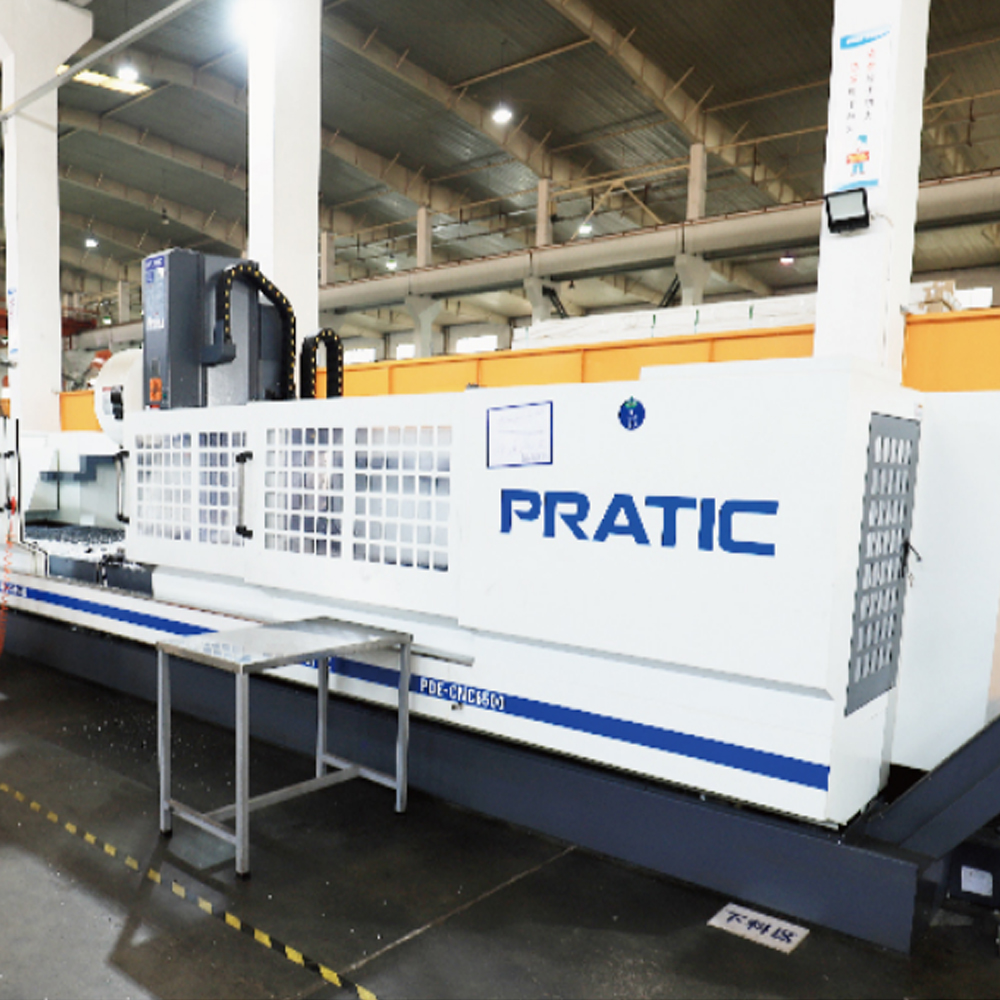
When evaluating equipment, the specification sheet rarely tells the full story. Focus on these areas:
The productivity case for full automation rests on three mechanisms: labor reduction, throughput consistency, and quality yield improvement.
On labor, a fully automatic cutting cell typically requires one operator to oversee two to four machines simultaneously, compared to one operator per semi-automatic machine. At 250 working days per year and standard labor costs, this difference alone often justifies the capital investment within two years for any facility running more than one shift.
On throughput, unattended operation is the key variable. A machine that can run overnight without an operator — because automatic feeders, part ejectors, and alarm systems handle exceptions — converts shift time into productive hours. Semi-automatic equipment stops when the operator leaves.
On quality yield, automation removes the human factors that introduce variance: fatigue, inconsistent clamping force, distraction. The precision machining services for industrial and automotive parts at manufacturers with integrated automatic cutting lines demonstrate consistently lower first-pass rejection rates compared to facilities relying on manual or semi-manual cutting as a first operation. The cumulative effect of higher yield, lower scrap, and reduced rework compounds across every downstream process.
Selecting a cutting machine supplier for an automotive program is a longer-term commitment than most capital equipment purchases. The machine will likely run the same platform for five to ten years. Evaluate suppliers on these dimensions:
The strongest signal of supplier quality is not the brochure — it is the willingness to support an audit of their production process and a visit to see machines running comparable parts in production conditions.

Copyright © 2025 Jiangyin Jianbang Aluminium Co., Ltd.
All Rights Reserved.
 Aluminum Extrusion Manufacturers
Aluminium Profile Suppliers
Aluminum Extrusion Manufacturers
Aluminium Profile Suppliers
