English
 日本語
日本語 한국어
한국어Indusrty News
Aluminum extrusion profiles are continuous cross-section shapes produced by forcing heated aluminum alloy billets through a steel die — a process that simultaneously defines the profile geometry and aligns the alloy's grain structure for optimal mechanical properties along the extrusion axis. The same fundamental process serves radically different end markets: architectural aluminum profiles prioritize aesthetics, thermal performance, and corrosion resistance; automotive extruded shapes prioritize high strength-to-weight ratio, crash energy absorption, and dimensional precision; commercial vehicle aluminum extrusions prioritize structural load capacity, fatigue resistance, and ease of assembly. Getting the alloy, temper, tolerance, and surface treatment right for each application is the difference between a profile that performs for decades and one that fails prematurely. This guide covers all three domains — including machined profiles and extrusion assembly systems — with specific alloy and design data for each.
Content
- 1 How Aluminum Extrusion Works and Why It Suits Multiple Industries
- 2 Architectural Aluminum Profiles: Design, Finish, and Performance
- 3 Automotive Extruded Shapes: Lightweighting and Structural Engineering
- 4 Commercial Vehicle Aluminum Extrusions: Load Capacity and Fatigue Performance
- 5 Machined Aluminum Profiles: Adding Precision to Extruded Geometry
- 6 Aluminum Extrusion Assembly Systems: T-Slot and Structural Framing
- 7 Selecting the Right Aluminum Profile: A Practical Decision Framework
How Aluminum Extrusion Works and Why It Suits Multiple Industries
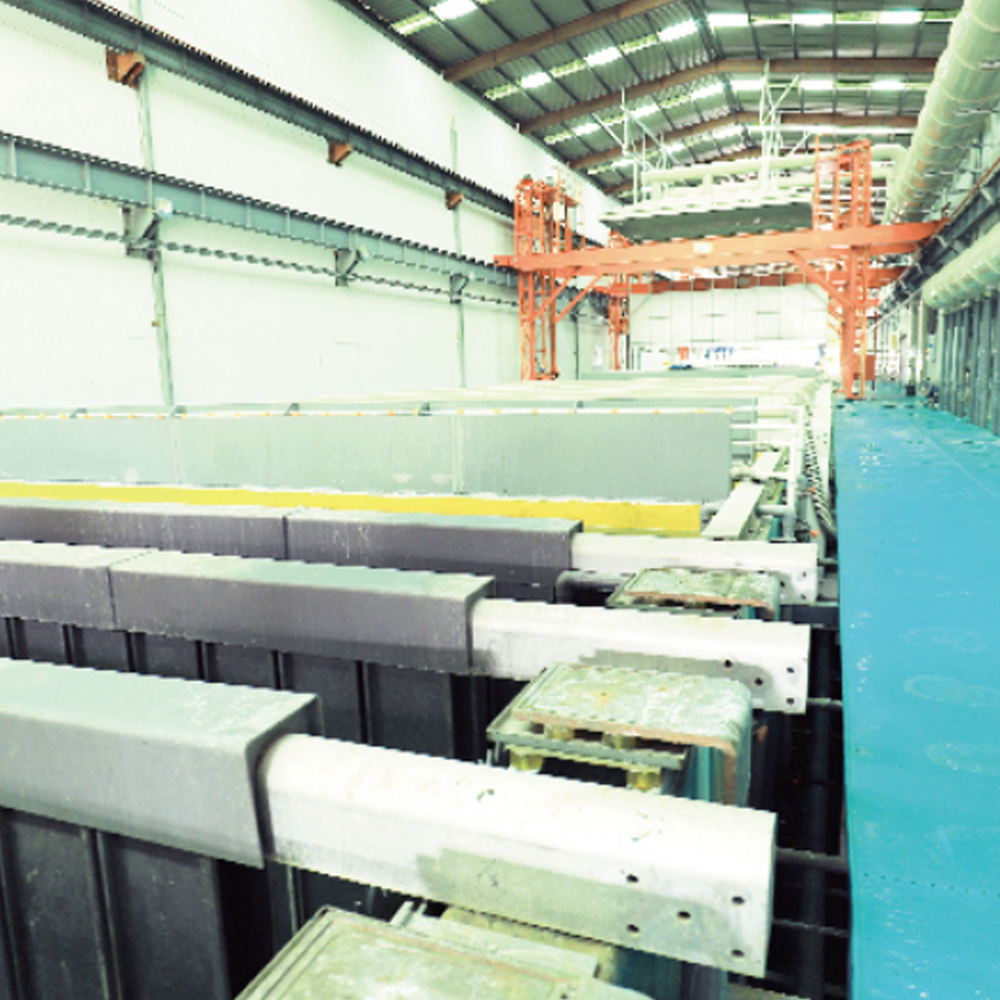
The extrusion process begins with a cylindrical aluminum billet heated to 450–500°C (840–930°F) — below melting point but soft enough to flow under pressure. A hydraulic ram forces the billet through a precision steel die with an opening matching the desired cross-section profile. The extruded shape emerges continuously from the die exit, is quenched, stretched to straighten, cut to length, and then artificially aged to develop final mechanical properties.
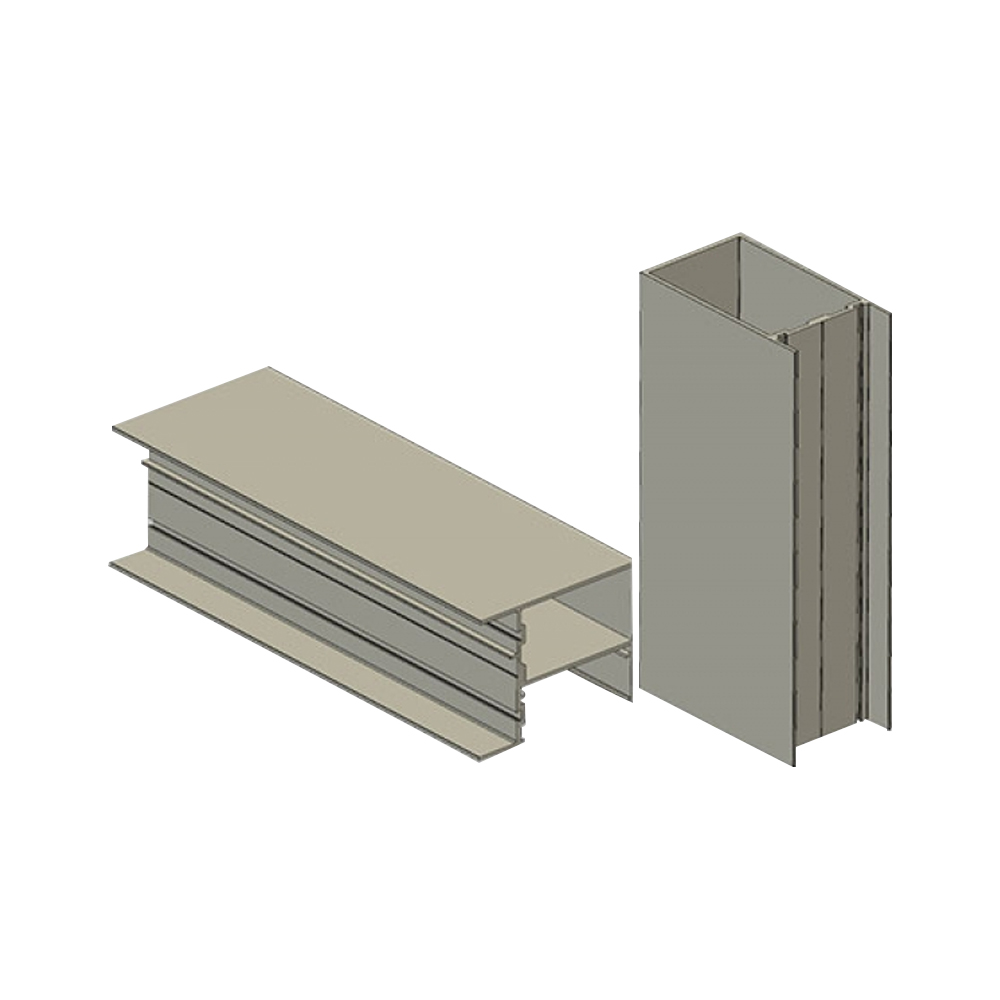
The process's industrial advantage is its ability to produce complex, net-shape or near-net-shape cross-sections — hollow tubes, multi-void sections, asymmetric channels, integrated T-slots — in a single operation without secondary forming or welding. A structural section that would require welding multiple flat plates together in steel can be extruded as a single integrated aluminum profile in one pass, eliminating weld joints that are both labor-intensive and structurally weaker than the parent material.
Key Alloy Series and Their Application Domains
| Alloy Series | Key Alloying Elements | Typical UTS (MPa) | Extrudability | Primary Applications |
|---|---|---|---|---|
| 6063 | Mg, Si | 145–186 (T5/T6) | Excellent | Architectural frames, decorative profiles |
| 6061 | Mg, Si, Cu | 260–310 (T6) | Good | Structural, automotive, machined profiles |
| 6082 | Mg, Si, Mn | 290–340 (T6) | Good | Commercial vehicles, heavy structural |
| 7075 | Zn, Mg, Cu | 503–572 (T6) | Moderate (complex shapes difficult) | Aerospace, high-performance automotive |
| 6005A | Mg, Si | 260–270 (T5/T6) | Very Good | Automotive body structures, rail vehicles |
Architectural Aluminum Profiles: Design, Finish, and Performance
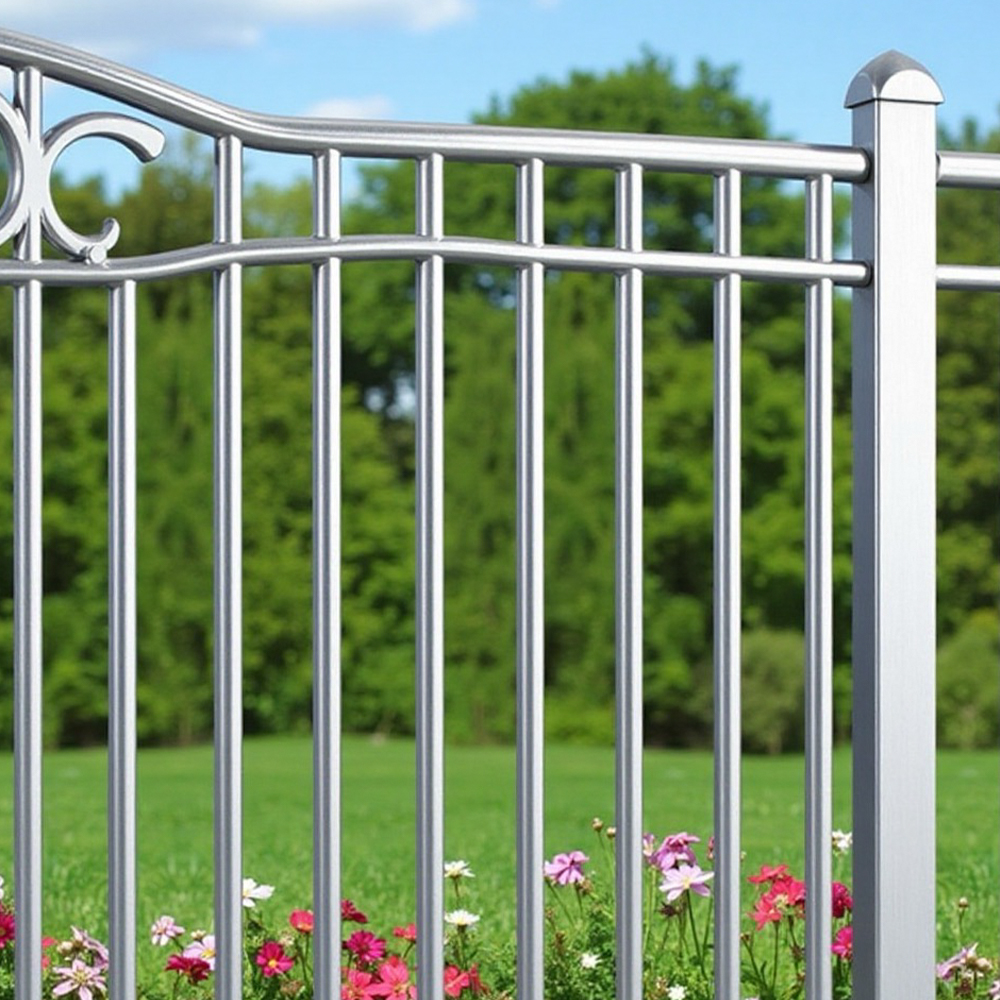
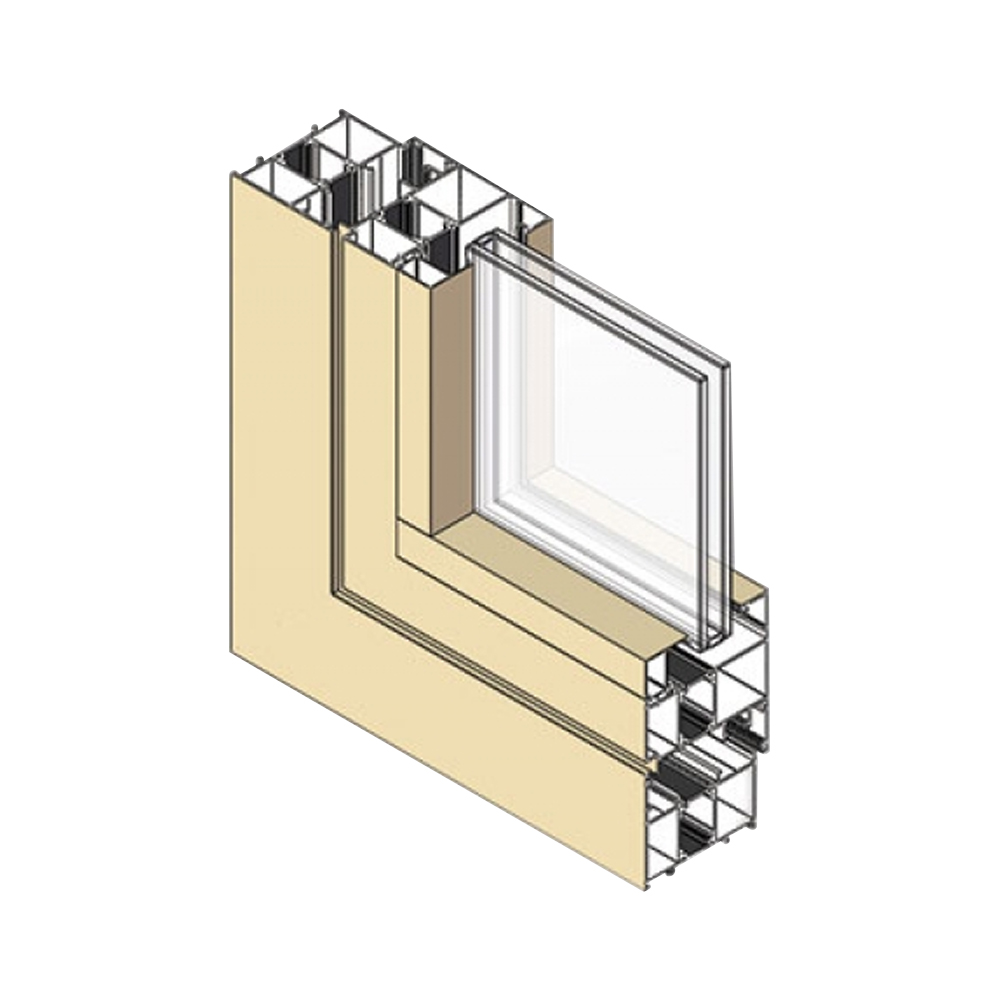
Architectural aluminum profiles are among the highest-volume extrusion products globally, used in window frames, curtain wall systems, door frames, structural glazing, shopfronts, balustrades, roofing systems, and interior partitioning. The architectural market places unique demands on extrusion: profiles must achieve tight dimensional tolerances for glazing seal integrity, accept decorative anodized or powder-coated finishes to exacting appearance standards, and in thermally broken applications, incorporate polyamide thermal break inserts to meet building energy codes.
Why 6063 Dominates Architectural Applications
Alloy 6063 is the standard for architectural profiles for three interconnected reasons. First, its relatively low alloy content gives it excellent extrudability — it flows smoothly through complex, thin-walled multi-void dies at high extrusion speeds, enabling the intricate cross-sections with integrated seal channels, screw ports, and drainage slots that window and curtain wall systems require. Second, 6063's surface quality after extrusion is exceptionally smooth, accepting anodizing to produce the bright, uniform appearance required for visible architectural applications. Third, its corrosion resistance in atmospheric exposure — even in coastal and industrial environments — is excellent without additional treatment.
In T5 temper (air-quenched from the extrusion press and artificially aged), 6063 achieves tensile strength of approximately 145–175 MPa — sufficient for framing applications where the glass or infill panel carries the primary lateral load. In T6 temper (solution heat-treated and artificially aged), strength rises to 205–240 MPa for applications requiring greater structural contribution from the frame member itself.
Thermal Break Technology in Architectural Profiles
Aluminum is an excellent thermal conductor — its thermal conductivity of 160–200 W/m·K is approximately 1,000 times greater than glass and 10,000 times greater than polyurethane foam insulation. In building envelopes, this means an unbroken aluminum frame conducts heat (or cold) directly through the wall, reducing thermal performance and creating condensation risk on interior surfaces. Thermally broken architectural profiles address this by incorporating a continuous low-conductivity polyamide 66 (PA66) insert — typically 12–36 mm wide — that separates the interior and exterior aluminum sections, reducing frame thermal conductivity to 2–3 W/m·K and enabling compliance with modern building energy codes such as Passive House, ASHRAE 90.1, and EU Energy Performance of Buildings Directive requirements.
Surface Finish Options and Their Durability
- Anodizing (Class 20/25 to AA25): Electrochemically grows an aluminum oxide layer on the profile surface — typically 15–25 micrometers thick for architectural exterior use. Anodized surfaces are integral to the aluminum, cannot peel, and provide 30+ year color stability in standard colors. Anodizing is the benchmark finish for prestige architectural applications.
- Powder coating (Qualicoat Class 1/2, AAMA 2604/2605): Thermosetting polymer applied electrostatically and cured at 180–200°C. Available in virtually unlimited colors and textures. Qualicoat Class 2 and AAMA 2605 specifications require UV stability of 10+ years in Florida exposure testing. Powder coating is the dominant architectural finish by volume due to color flexibility.
- PVDF / Kynar 500 liquid coating: Fluoropolymer coating system that meets the most stringent color retention and chalk resistance requirements — standard for high-rise curtain wall and landmark building projects. AAMA 2605 certified PVDF coatings are warranted for 20+ years of color and gloss retention in aggressive exposure environments.
Automotive Extruded Shapes: Lightweighting and Structural Engineering
Automotive aluminum extrusions serve a fundamentally different set of design requirements than architectural profiles. In vehicle applications, every gram saved in body structure reduces fuel consumption or extends electric vehicle range — the automotive industry operates under the rule of thumb that a 10% reduction in vehicle weight yields approximately a 6–8% improvement in fuel economy. Aluminum extrusions achieve 40–60% weight reduction versus equivalent steel sections while meeting or exceeding structural performance requirements through optimized cross-section design and higher-strength alloy selection.
Key Automotive Applications for Aluminum Extrusions
- Bumper beams and crash management systems: Hollow multi-cell extrusions in 6082-T6 or 7003-T5 are engineered to absorb specific amounts of crash energy through controlled progressive folding. The multi-cell void geometry allows the section to crumple at a predictable force level — designers tune wall thickness, cell count, and alloy to match the vehicle's crash pulse requirements.
- Rocker panels and side sill structures: Closed hollow sections with internal webs provide bending stiffness and side impact resistance. These profiles in 6082-T6 contribute to the vehicle's torsional rigidity (measured in Nm/degree) — a key ride and handling parameter.
- Floor structures and battery enclosures in EVs: Electric vehicle battery packs require aluminum extrusion frames that protect the battery cells from intrusion, manage thermal loads, and provide structural contribution to the vehicle's body-in-white. These large-section profiles are often water-cooled by integrating coolant channels directly into the extrusion cross-section, eliminating separate tube routing.
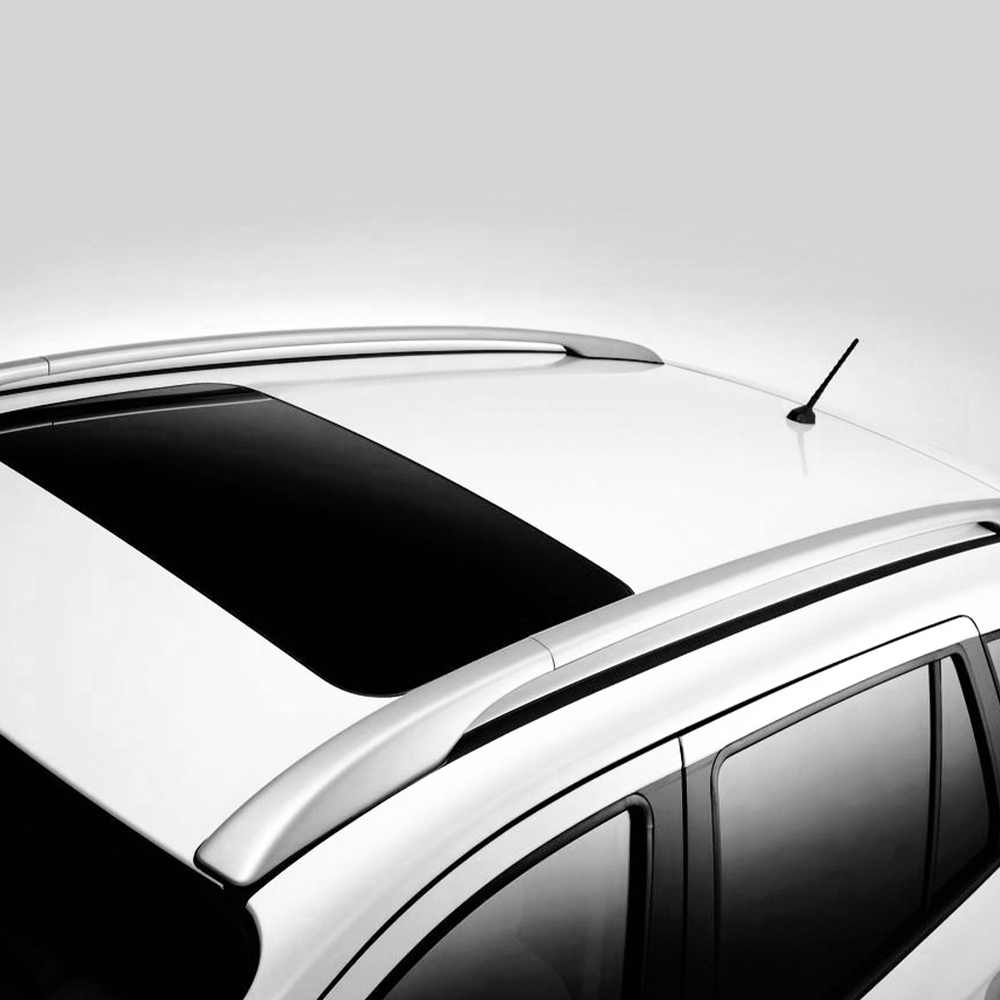
- Roof rails and door frames: Visible and structural extrusions where dimensional precision (straightness tolerances of ±0.5 mm over 2,000 mm length) and surface appearance for painting are equally critical.
- Subframe and suspension cradles: High-strength 6061-T6 or 6082-T6 extrusions machined after extrusion to create mounting features, bearing housings, and bolt patterns — the machining step exploits the near-net-shape extrusion geometry to minimize material removal and machining time.
Joining Automotive Aluminum Extrusions
Automotive aluminum body structures combine extrusions with stampings, castings, and sheet metal in multi-material assemblies. The joining methods used significantly affect structural performance, weight, and manufacturing cost. MIG welding (typically using 5356 or 4043 filler wire) is the established method for structural joints but reduces strength in the heat-affected zone — a 6082-T6 extrusion welded MIG drops to approximately 170 MPa local strength vs. 310 MPa parent metal. Friction stir welding (FSW) produces joints at 80–90% parent metal strength by joining without melting and is standard in EV battery floor structures. Structural adhesive bonding combined with self-piercing rivets (SPR) is the dominant method for joining dissimilar materials and for thin-wall extrusion-to-sheet joints where weld heat distortion would be unacceptable.
Commercial Vehicle Aluminum Extrusions: Load Capacity and Fatigue Performance
Commercial vehicles — trucks, trailers, buses, and specialty transport — use aluminum extrusions in body side panels, floor beams, roof bows, cargo track systems, and structural frame components. The commercial vehicle market drives some of the largest extrusion cross-sections produced industrially, with trailer side rail extrusions commonly spanning 200–400 mm in height with complex internal web arrangements designed for both bending strength and ease of assembly.
Why 6082 Is Preferred Over 6061 for Commercial Vehicles
While 6061-T6 is the workhorse structural alloy in North American automotive and general engineering applications, European commercial vehicle manufacturers predominantly specify 6082-T6, which achieves slightly higher yield strength (255–260 MPa vs. 240–276 MPa for 6061-T6) and superior fatigue performance due to its manganese content, which refines grain structure. In applications subject to cyclic loading — trailer frame rails, body side rails experiencing road vibration and cargo load cycling over millions of kilometers — the higher fatigue endurance limit of 6082 translates directly to longer service life and lower maintenance replacement frequency.
Cargo Track and Logistics Rail Extrusions
One of the most engineering-intensive commercial vehicle extrusion applications is the logistics floor rail — an aluminum extrusion running the full length of a trailer floor that accepts adjustable cargo tie-down hardware. These profiles must achieve tie-down point loads of 2,000–5,000 kg per attachment location while maintaining a floor-flush profile that does not create trip hazards and allows pallet jack operation across the rail. The cross-section integrates a T-slot or dovetail channel for hardware engagement, steel reinforcing inserts at high-load zones in some designs, and drainage provisions to prevent water accumulation. Dimensional tolerance on the slot width is typically ±0.1 mm to ensure hardware engagement and release without binding.
Aluminum vs. Steel in Commercial Vehicle Bodywork
| Criterion | Aluminum Extrusion | Steel |
|---|---|---|
| Density | 2.70 g/cm³ | 7.85 g/cm³ |
| Weight saving (equivalent stiffness) | 40–55% lighter | Baseline |
| Corrosion resistance | Excellent (no painting required structurally) | Requires coating; rust risk at damage |
| Payload increase (40t GVW truck) | 400–800 kg additional payload | Baseline |
| Material cost | Higher (3–4× per kg) | Lower |
| Total lifecycle cost | Lower (fuel savings + payload + no rust maintenance) | Higher over 10+ year vehicle life |
Machined Aluminum Profiles: Adding Precision to Extruded Geometry
Machined aluminum profiles are extruded sections that undergo secondary CNC machining operations — milling, drilling, tapping, boring, or turning — to add features that cannot be produced by the extrusion die alone: mounting holes, threaded inserts, counterbores, relief cuts, and precision-located datum surfaces. The combination of extrusion and machining exploits the cost advantages of both processes: extrusion creates the complex cross-section geometry cheaply per meter; machining adds the locational features cheaply per part.
Machinability of Common Extrusion Alloys
Aluminum alloys machine significantly more easily than steel — cutting speeds for aluminum are typically 3–5 times higher than for equivalent steel operations, and tool life is substantially longer. Among extrusion alloys, machinability varies by alloy composition. 6061-T6 and 6082-T6 machine very well with sharp carbide or high-speed steel tooling, producing good surface finishes (Ra 0.8–3.2 µm in standard turning/milling) without built-up edge issues common in softer alloys. 6063-T6, while excellent for extrusion, has a tendency to produce long stringy chips rather than short broken chips in machining — a consideration for automated machining cell designs where chip management affects cycle time.
Tolerances Achievable in Machined Profiles
As-extruded aluminum profiles meet dimensional tolerances defined by EN 755-9 (European) or AA Aluminum Standards and Data (North American) — typically ±0.3–0.5 mm on cross-section dimensions for medium-complexity profiles. Machining can refine critical dimensions to ±0.01–0.05 mm where precision assembly requires it — bearing housing bores, locating pin holes, and sealing surface flatness. For automotive and commercial vehicle applications where body-in-white assembly relies on consistent datum surfaces across high production volumes, machined locating features on extruded components are standard practice.
Aluminum Extrusion Assembly Systems: T-Slot and Structural Framing
Beyond single-profile structural applications, aluminum extrusion assembly systems use standardized T-slot profiles — square or rectangular sections with continuous T-shaped channels on each face — as modular construction elements for machine frames, workstations, conveyor structures, safety guarding, and custom industrial fixtures. The T-slot system allows components to be connected anywhere along the profile length using sliding T-nuts and bolted brackets, enabling rapid reconfiguration without welding or drilling.
Standard T-Slot Profile Series
T-slot extrusion assembly profiles are organized by modular grid size — the dimension that determines hole spacing, bracket compatibility, and load capacity. The most common series are 20×20 mm, 30×30 mm, 40×40 mm, and 80×80 mm profiles, with lighter 20-series suited for enclosures and lightweight fixtures and heavy 80-series profiles supporting machine tool frames and load-bearing industrial structures. Profile weight runs from approximately 0.6 kg/m for 20×20 to 5.2 kg/m for 80×80 sections, with moment of inertia scaling that allows calculating bending deflection and load capacity for any span configuration.
Connection Hardware and Assembly Methods
- T-nut and bolt connections: The fundamental assembly method — a T-nut slides into the profile channel and a bolt threads into it, clamping a bracket or accessory to the profile face. Connections can be made or repositioned at any point along the profile without drilling, providing complete design flexibility. Standard M5, M6, M8, or M10 bolt sizes correspond to specific profile series.
- End face connectors: Threaded anchor fasteners inserted into the profile end face allow perpendicular connections between profile ends — the foundation of 3D frame construction. These connectors reach inside the profile void through a cross-drilled access hole and expand against the inner wall, achieving pull-out forces of 3,000–8,000 N depending on profile size.
- Cast aluminum corner brackets and gussets: Right-angle and multi-axis cast brackets bolt to profile faces using T-nut connections and provide angular rigidity at frame joints. Heavy-duty gusset brackets for 80-series profiles can resist moments of 500–1,500 Nm at frame corners.
- Linear joints with internal connectors: Profiles joined end-to-end for longer spans use internal bar connectors that insert into both profile ends and are secured by side-entry set screws — creating continuous load-path connections without visible external hardware.
Automotive and Vehicle Use of T-Slot Assembly Systems
T-slot extrusion assembly systems are used within the automotive industry not as vehicle components but as manufacturing infrastructure — assembly jigs, body-in-white fixtures, part presentation racks, ergonomic workstation frames, and prototype vehicle platforms. A prototype vehicle chassis or test structure can be built from T-slot extrusion profiles in days rather than the weeks required for welded steel fabrication, enabling rapid design iteration in vehicle development programs. The profiles' reconfigurability also supports lean manufacturing principles — fixture systems for different vehicle variants can share the same extrusion inventory, with only brackets and locating details changed between variants.
Selecting the Right Aluminum Profile: A Practical Decision Framework
With the alloy, temper, cross-section geometry, surface finish, and post-extrusion operations all affecting performance and cost, a structured selection approach prevents over-specification (paying for properties you don't need) and under-specification (selecting a profile that fails in service).
- Define the primary performance requirement: Is the critical demand structural strength, thermal performance, corrosion resistance, appearance, or dimensional precision? The primary requirement drives alloy selection — 6063 for appearance and thermal, 6082 for structural and fatigue, 7075 for maximum strength.
- Determine the load case and calculate required section properties: For structural profiles, calculate the required moment of inertia (I) and section modulus (Z) from the applied bending moments and allowable stress. This defines the minimum cross-section geometry and wall thickness before die design begins.
- Assess the production volume and die cost justification: Custom extrusion dies cost $1,500–$10,000 depending on complexity and size. At low volumes (under 500 kg of finished profile), using a standard catalog profile modified by machining is typically more economical than commissioning a custom die. High volumes justify custom geometry optimization that reduces material per meter while meeting structural requirements.
- Specify surface treatment before finalizing cross-section: Anodizing and powder coating add dimensional thickness to the profile — typically 12–25 µm for anodizing and 60–100 µm for powder coating. For profiles with tight-fit features or precision mating surfaces, the finished (coated) dimension rather than the as-extruded dimension must meet the functional requirement. Specify that critical dimensions be controlled after surface treatment.
- Consider downstream assembly and joining method early: Profiles destined for MIG welding should specify alloy/temper combinations with good weldability and low heat-affected zone strength loss. Profiles for adhesive bonding require specific surface preparation (degreasing, conversion coating, or anodizing). Profiles for mechanical fastening need sufficient wall thickness at fastener locations to achieve required clamp load without thread stripping — minimum wall thickness for M6 threaded inserts in 6063 is approximately 3.5–4.0 mm.